
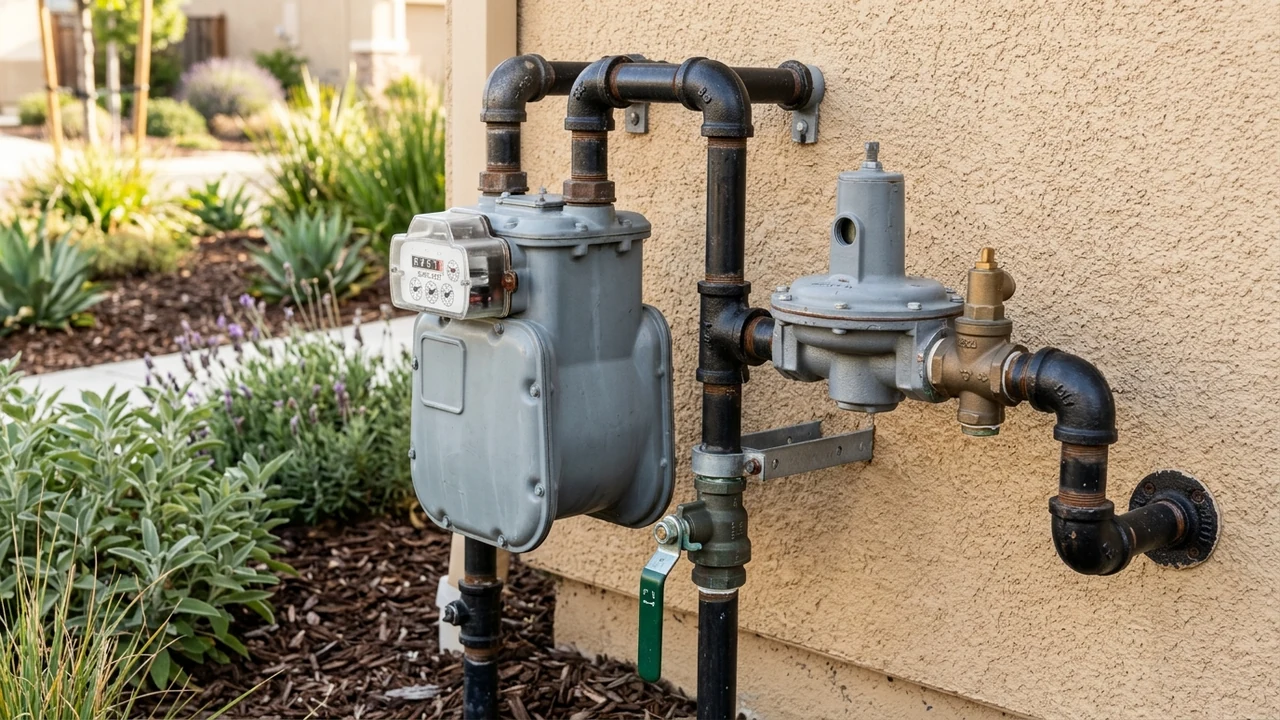
Natural gas is one of the safest, most efficient energy sources powering water heaters, furnaces, kitchen ranges, and outdoor appliances across Pittsburg, CA and East Contra Costa County. Because residential natural gas piping operates silently behind drywall, beneath concrete slabs, and through crawlspaces, homeowners rarely think about their gas distribution network until a component fails. However, unlike a minor water leak that causes localized dampness, an undetected natural gas leak presents an immediate risk of combustion, structural fire, and carbon monoxide or asphyxiation hazards.
In Northern California, where expansive delta clay soils shift between winter rains and dry summer heat – and where regional seismic activity places constant mechanical stress on rigid threaded piping – recognizing the early symptoms of a compromised gas line is essential for every property owner. Knowing what are the warning signs of a gas line problem allows you to take decisive emergency action before a minor fitting seepage escalates into a life-threatening emergency.
Sensory Warning Signs: Sight, Sound, and Smell
Because pure natural gas (primarily methane) is naturally colorless, tasteless, and odorless, utility providers like PG&E inject a chemical odorant called mercaptan before distributing gas through municipal mains in Pittsburg, Antioch, Oakley, and Brentwood. Mercaptan gives leaking gas its unmistakable warning signature, alongside several physical indicators.
1. The Classic Sulfur or “Rotten Egg” Odor
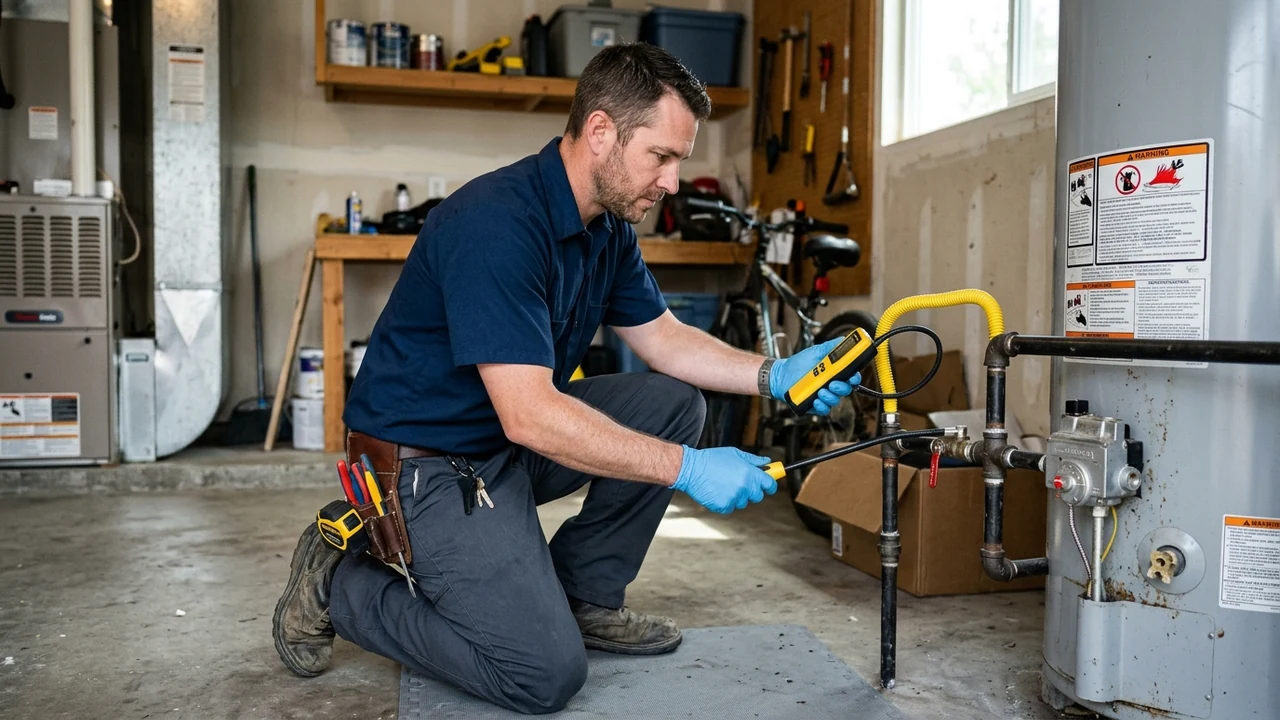
The most immediate indicator of a gas leak is a sharp, sulfuric smell resembling rotten eggs or decaying cabbage. Even a faint whiff near a stove, furnace closet, water heater garage pedestal, or exterior gas meter assembly warrants immediate investigation. Never assume a faint sulfur smell is simply a dry floor drain trap or a passing outdoor odor until the gas piping has been professionally tested with an electronic combustible gas detector.
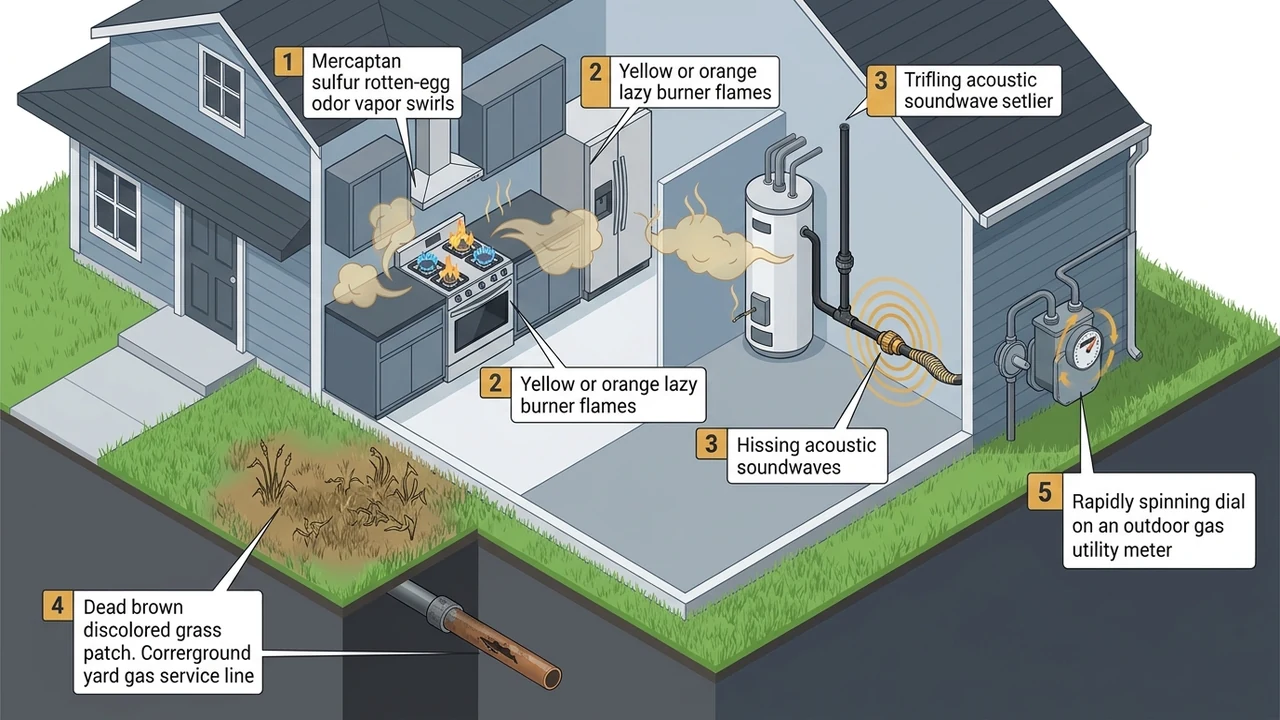
2. Hissing, Whistling, or Roaring Sounds Near Piping or Appliances
Residential natural gas enters the home after the meter regulator at approximately 7 inches of water column (0.25 PSI), or up to 2 PSI in modern high-capacity corrugated stainless steel tubing (CSST) manifold systems. When a threaded black iron union cracks, a flare fitting loosens, or an appliance flex connector splits, pressurized gas escaping through the narrow aperture produces a distinct hissing or whistling sound. If an underground yard main ruptures heavily, you may hear a low, continuous vibration or roaring sound near the foundation perimeter.
3. Yellow or Orange Burner Flames Instead of Crisp Blue
Properly pressurized natural gas burning with an adequate oxygen mix produces a crisp, steady blue flame with a light blue inner cone. If your kitchen range burners, furnace ignition assembly, or tank water heater burner begins burning with a lazy, flickering yellow or orange flame, this signals incomplete combustion caused by pressure irregularities, regulator failure, or obstructed burner orifices. Incomplete gas combustion generates dangerous levels of odorless carbon monoxide (CO) gas inside the living space.
Outdoor and Environmental Warning Signs on Your Pittsburg Property
Many residential gas leaks occur outside the building envelope along the buried service lateral running between the street curb, the exterior meter, and detached structures such as pool heaters, outdoor kitchens, or ADUs.
4.Localized Dead or Discolored Patches of Grass and Vegetation
When an underground gas pipe develops corrosion pinholes or joint separation beneath your lawn or planter beds, escaping methane displaces oxygen in the root zone and dries out the surrounding soil. If you notice an unexplained circular patch of dead, yellowing, or stunted grass,wilting shrubs, or dying garden plants over the path of your buried gas line despite regular irrigation, an underground gas leak is a primary suspect.
5. Bubbling Standing Water or Blowing Dirt
After winter rainstorms in Pittsburg or following landscape irrigation, walk the perimeter of your gas meter and underground supply run. If you observe continuous air bubbles rising through puddles, mud, or wet soil – or small clouds of dry dust blowing upward from a crack in the pavement or dirt on a calm day – pressurized gas is actively venting through the ground.
6. An Unexplained Spike in Your Monthly PG&E Gas Usage
Sub-surface and attic gas leaks often vent directly into the open air where wind disperses the mercaptan odor before residents can smell it indoors. Review your monthly gas therms consumption on your utility statement. If your therms usage climbs by 15% to 40% compared to the same month last year without adding new gas appliances or changing thermostat habits, your system may be losing fuel continuously through a hidden piping defect.
Physical Health Symptoms Associated With Indoor Gas Exposure
Low-level indoor gas accumulation or incomplete appliance combustion reduces breathable oxygen levels and introduces toxic byproducts. Seek fresh air immediately if household members or pets experience symptoms that mysteriously improve when leaving the house:
- Sudden unexplained headaches, dizziness, or lightheadedness inside specific rooms.
- Nausea, unusual fatigue, drowsiness, or difficulty concentrating.
- Eye and throat irritation or shortness of breath when heating or cooking appliances cycle on.
Common Causes of Residential Gas Line Failures in East Contra Costa County
During field inspections across Pittsburg, CA, licensed plumbing specialists most frequently trace gas leaks to four mechanical root causes:
- Corroded Black Iron and Galvanized Steel Piping: Older homes built with bare or wrapped steel underground piping suffer from electrochemical soil corrosion when exposed to moist delta clay soils.
- Aging Brass Flare Valves and Corroded Flex Connectors: Uncoated brass shutoff valves and 1970s-era appliance connectors become brittle over decades of thermal cycling and vibration.
- Soil Settlement and Seismic Shifting: Seasonal expansion and contraction of clay soil places shear loads on rigid 90-degree elbow fittings where pipes penetrate concrete foundations or exterior stucco walls.
- Unbonded CSST Lightning/Electrical Arcing: Flexible yellow-jacketed CSST gas tubing that is not properly electrically bonded to the home’s grounding electrode system can develop pinhole perforations during electrical surges.
Emergency Protocol: What to Do Immediately If You Suspect a Gas Leak
- Evacuate Immediately: Get all family members and pets out of the building and move at least 100 feet upwind from the structure.
- Do Not Operate Any Electrical Switches or Electronics: Do not flip light switches on or off, do not unplug appliances, do not use garage door openers, and do not use a phone until you are safely outside. A microscopic electrical arc inside a wall switch can ignite accumulated gas.
- Never Use Open Flames: Extinguish any candles or cigarettes immediately and never strike a match to search for a leak.
- Shut Off the Main Gas Valve Only If Safe: If the smell is mild and the exterior gas meter is safely accessible outdoors, use an adjustable wrench to turn the main rectangular supply valve a quarter-turn so the lug sits perpendicular (crosswise) to the pipe.
- Call Emergency Responders and Licensed Gas Plumbers: Once at a safe distance, call 911 and PG&E to secure the utility feed, then contact a licensed Pittsburg, CA plumbing contractor to perform manometer pressure testing, pinpoint the leak, and complete code-compliant repairs.
Frequently Asked Questions
Can I use soapy water to check for a gas leak myself?
While brushing a commercial leak-detection soap solution onto an exposed fitting can reveal large bubble formations, DIY testing misses hairline cracks behind walls, sub-slab leaks, and micro-seepage. Furthermore, working near an active gas leak without calibrated combustible gas sensors is hazardous. Always rely on licensed professionals.
Who is responsible for repairing a leaking gas line in Pittsburg, CA?
The utility provider (PG&E) owns and maintains the service piping from the street main up to the outlet side of your gas meter. All “house-side” gas piping running from the meter outlet into your home, crawlspace, attic, and appliances is the legal responsibility of the property owner and must be repaired by a licensed plumbing contractor.
