
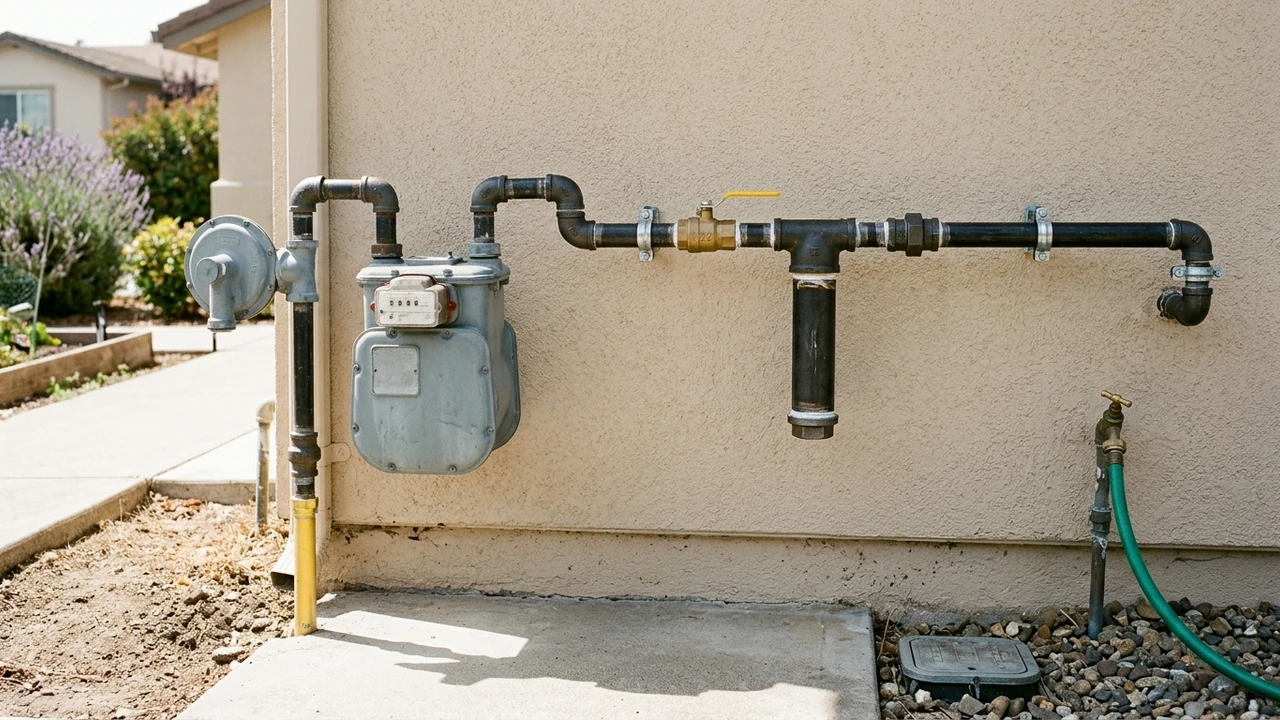
A gas leak is not something you can wait until next week to fix. If your home or building has old, rusty gas pipes, your family and property are at real risk every single day. Here is how to spot the warning signs early, understand what a full gas line repipe costs, and know when it is time to replace old pipes for good.
What Does Gas Line Repiping Actually Mean for Your Property?
Gas line repiping means taking out old, worn-out, or too-small gas pipes and putting in brand-new, safe piping from the meter to your appliances. Most homes built more than 35 to 50 years ago still rely on original steel pipes that slowly rust from the inside out.
Over time, moisture in the soil and air eats away at metal joints and threads. Even a tiny pinhole leak can let dangerous gas build up behind walls or under crawlspaces before you notice a thing.
In Pittsburg and across Contra Costa County, many older properties also have pipes that are simply too narrow for modern appliances. Upgrading through a professional gas line repiping service gives every stove, furnace, and water heater the steady gas flow it needs to run safely.
Why Do Older Homes Have Low Gas Flow?
Years ago, a typical house only had a small furnace and a basic stove running on natural gas. Today, homeowners add high-BTU tankless water heaters, outdoor grills, pool heaters, and big kitchen ranges that demand 150,000 to 250,000 BTUs per hour all at once.
When too many appliances pull gas through a narrow half-inch pipe, the line pressure drops fast. You might see yellow stove flames instead of crisp blue ones, or your water heater might shut off in the middle of a shower.
7 Clear Signs Your Gas Line Needs a Repipe
In my professional experience, I have found that property owners often ignore weak pilot lights for months, thinking it is just a bad stove burner when the real problem is flaking rust clogging the main gas pipe. Catching these seven warning signs early can save you from an emergency shutoff and keep repair bills down by 30% to 45%.
Your senses are your first line of defense around natural gas. Watch, listen, and smell around your meter, crawlspace, and gas appliances for these red flags.
1. The Rotten Egg Smell (Mercaptan Odor)
Natural gas has no smell on its own, so utility companies add a chemical called mercaptan that smells like rotten eggs or sulfur. If you catch even a faint whiff near your stove, yard, or garage, over 85% of the time there is an activefitting or pipe leak nearby.
2. Hissing or Whistling Sounds Near Pipes
A pressurized gas pipe with a crack or loose joint often makes a soft hissing, whistling, or roaring sound. You can hear this sound clearly when the house is quiet and all appliances are turned off.
3. Dead Grass or Yellow Patches in the Yard
When an underground gas pipe leaks beneath your lawn or garden, the escaping gas pushes oxygen out of the dirt. Within 2 to 4 weeks, grass and bushes right above the buried line will turn yellow, wilt, and die even if you water them daily.
4. Rust, Flaking, and Corrosion on Exposed Pipes
Walk out to your gas meter or peek into your crawlspace with a flashlight. If you see thick brown rust, flaking metal scales, or white powdery spots on threads, the pipe wall has already lost 20% to 40% of its original thickness.
5. Gas Bills Climbing Without Extra Use
A slow pinhole leak after the gas meter runs 24 hours a day, seven days a week. Many homeowners only realize a line is leaking underground when their monthly gas bill jumps by 15% to 30% with no change in weather.
6. Appliances Struggling to Stay Lit
When rust flakes break loose inside an old galvanized pipe, they travel downstream and block regulator valves. If your water heater or furnace keeps locking out, our water heater repair technicians always test the incoming gas pressure first before swapping parts.
7. Physical Symptoms Like Dizziness or Headaches
Breathing in low levels of natural gas or carbon monoxide from incomplete burning reduces oxygen in your blood. If people in your home feel dizzy, tired, or get headaches that go away within 30 to 60 minutes of stepping outside, leave the building right away and call 911.
Gas Line Repair vs. Full Repiping: How to Make the Smart Choice
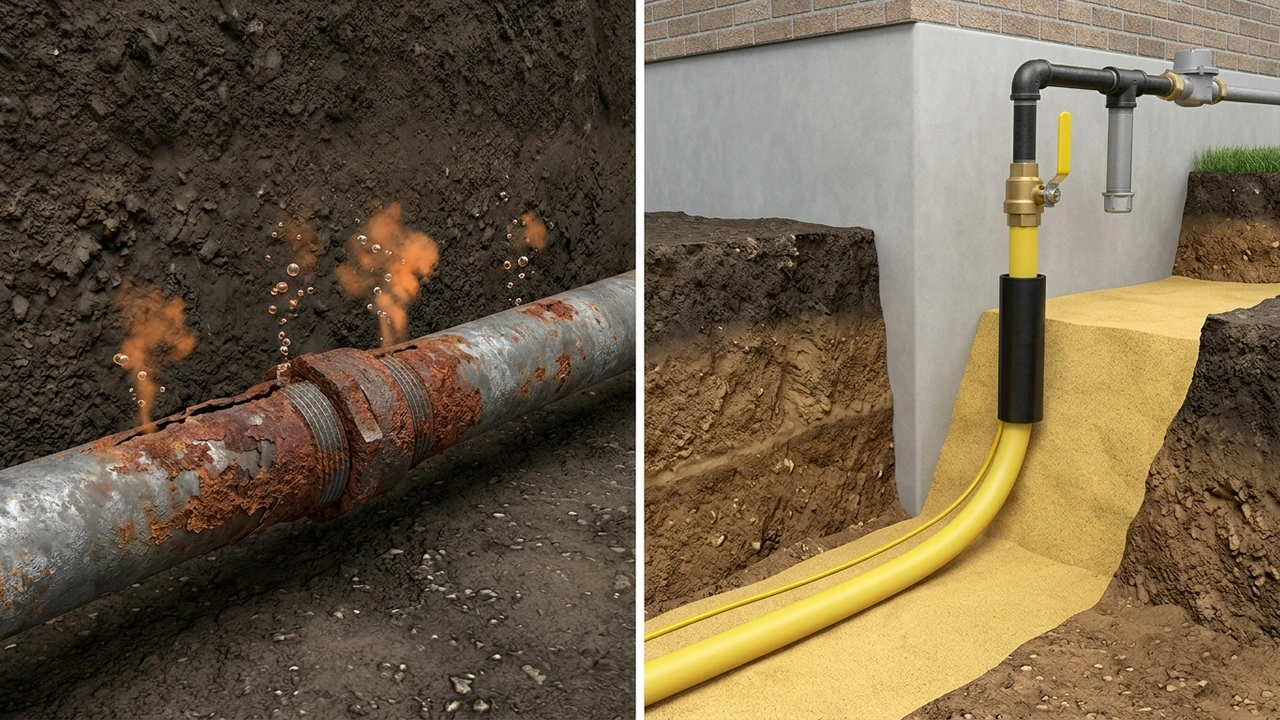
Not every gas issue needs a whole-house repipe, and a good plumber will tell you the truth after a pressure test. If a single union nut came loose near your dryer and the rest of your black iron pipe looks clean and solid, a simple spot repair costing $250 to $650 is all you need.
However, patching an old pipe makes no sense if the metal is crumbling in multiple spots. We recently compared the key decision factors in our guide on gas line repair vs. repiping factors in Pittsburg, CA so owners can weigh age against cost.
As a simple rule of thumb, if your gas pipes are over 40 years old or fail a pressure test in more than two places, a full repipe is safer and cheaper than paying for three separate repairs over two years.
Choosing the Right Material for Your Gas Line Repipe
In my professional experience, I have seen DIY repairs fail inspection simply because someone used the wrong metal fitting or mixed incompatible pipe types underground. Modern plumbing codes give us four tough, reliable materials that last 40 to 75+ years when installed the right way.
Each pipe material has a specific job depending on whether the line runs inside walls, above ground, or buried beneath your yard.
Black Iron and Coated Steel Pipe
Black iron is the classic, heavy-duty choice for indoor branches and exposed meter connections. It handles high heat well and costs about $15 to $35 per linear foot installed, though it must have a protective yellow epoxy or PVC coating if it touches soil.
Corrugated Stainless Steel Tubing (CSST)
CSST is a flexible stainless steel pipe wrapped in a protective jacket that snakes through tight attic spaces and walls without needing dozens of elbow joints. Because fewer joints mean fewer leak points, CSST cuts labor time by 25% to 40% during indoor retrofits when properly bonded and grounded.
High-Density Polyethylene (HDPE) Plastic Pipe
For underground yard lines running from the street meter to the house or pool heater, yellow HDPE plastic is king. It never rusts, flexes safely during minor ground shifts, and lasts over 50 to 100 years underground when joined with heat-fusion fittings.
Copper and Brass Piping (Where Permitted)
Some regions allow special gas-rated copper tubing, but natural gas with high hydrogen sulfide content can cause internal flaking over time. In most California cities, plumbers stick to black iron indoors and HDPE underground to pass local city inspection on the first try.
Understanding Code Requirements and Safety Standards for Gas Repiping
Gas line work is never a place for shortcuts. Every new gas pipe installation must follow strict burial depth, pipe sizing, and pressure-testing rules set by state and federal regulators.
According to federal pipeline safety findings from the U.S. Pipeline and Hazardous Materials Safety Administration (PHMSA), corrosion and aging material failures account for more than 35% of residential distribution incidents nationwide.
In California, underground plastic gas lines must sit at least 18 inches below grade (or 12 inches where there is no vehicle traffic) with a yellow insulated copper tracer wire laid right alongside the pipe so crews can locate it later.
Furthermore, natural gas safety guidelines overseen by the California Public Utilities Commission (CPUC) require an Excess Flow Valve (EFV) or seismic shutoff valve on new service replacements, which automatically blocks gas flow within seconds if a line ruptures during an earthquake.
When you plan a major remodel or upgrade to a high-efficiency tankless water heater installation, your plumber must calculate the exact total BTU load and pipe length so pressure drop stays under 0.5 inches of water column.
The Step-by-Step Process of Gas Line Repiping
In my professional experience, I have found that homeowners feel much calmer when they know what happens each hour while the gas is turned off. Most residential gas repiping projects take just 1 to 2 days from start to finish.
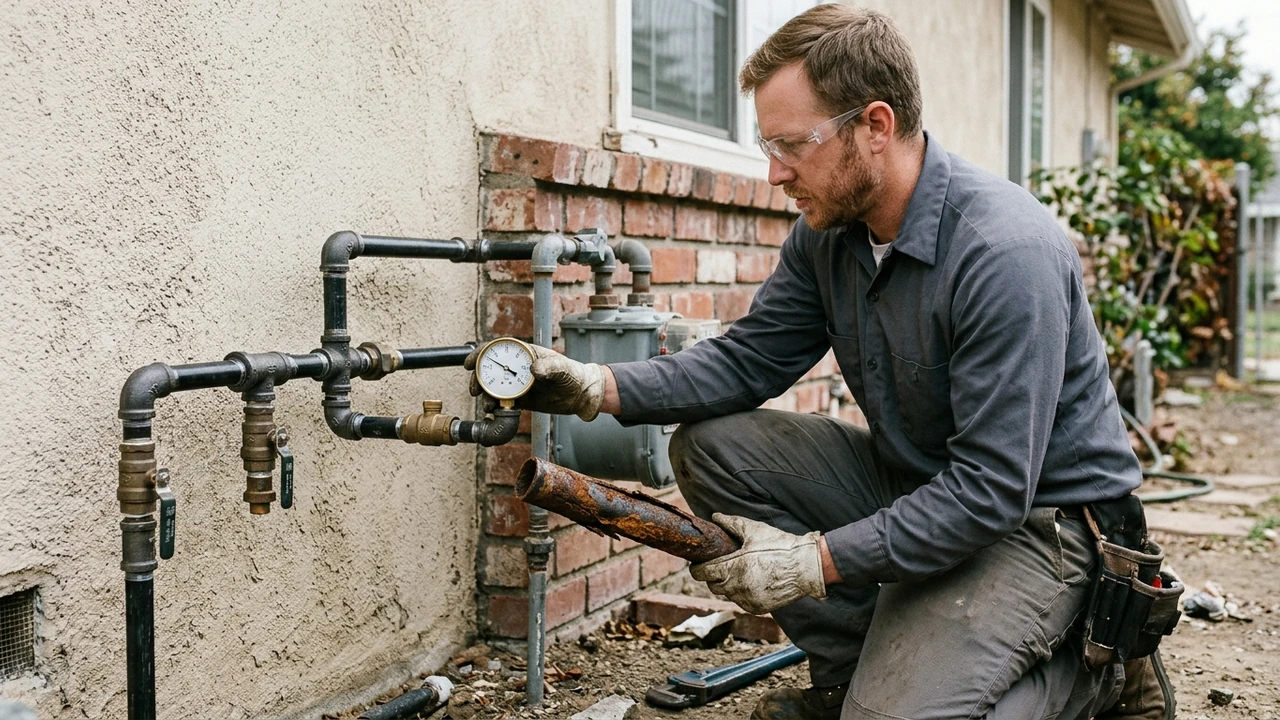
Here is the exact six-step workflow our licensed crew follows to get your gas back on safely and fast.
Step 1: Manometer Pressure Testing and BTU Load Audit
First, we shut off the main gas valve and attach a sensitive gauge called a manometer to test the system at 3 to 15 PSI. Even a tiny drop of 0.1 PSI over 15 minutes proves there is a hidden leak that needs attention, as we explain in our guide to professional gas leak inspections.
Step 2: Pulling City Permits and Utility Marking
Before digging a single inch of dirt, we pull the required city building permit and call 811 to mark buried electric, water, and fiber lines. Skipping permits can trigger fines of $500 to $2,500 and hold up future home sales.
Step 3: Trenching or Routing New Piping
For indoor runs, we route new black iron or bonded CSST through the attic or crawlspace with minimal drywall cuts. For yard lines, we dig a clean 18-inch-deep trench and lay bed sand so sharp rocks never scratch the new polyethylene pipe.
Step 4: Installing New Shutoff Valves and Sediment Traps
At every appliance connection, we install a brand-new quarter-turn brass ball valve, a flexible stainless steel connector, and a 3-inch sediment trap (drip leg). That small sediment trap catches any tiny dust or moisture before it can ruin your furnace or water heater gas valve.
Step 5: City Inspector Pressure Test
Once all new pipes are connected, we pump the sealed lines up with air to at least 10 to 15 PSI (more than 20 times normal operating pressure) while the city inspector watches the gauge for 15 to 30 minutes. The needle must not budge at all to earn final sign-off.
Step 6: Purging Air, Relighting Pilots, and CO Testing
After passing inspection, we reconnect the utility meter, purge air from the lines, relight every appliance, and check flue drafts. According to indoor air quality research from the U.S. Environmental Protection Agency (EPA), properly adjusted gas burners with clean blue flames cut indoor carbon monoxide and nitrogen dioxide emissions by up to 90% compared to poorly tuned units.
If your business property or multi-unit building needs high-capacity piping, our commercial plumbing specialists also handle multi-meter headers and restaurant kitchen gas manifolds.
How Much Does Gas Line Repiping Cost in 2026?
The cost to repipe a gas line depends on total pipe length, pipe diameter, whether trenching is needed, and how many appliances hook up to the manifold. Most homeowners spend between $1,200 and $4,800 for a complete residential gas line replacement.
- Single Appliance Branch Run (15 to 30 feet): Typically costs $550 to $1,350, including a new shutoff valve, sediment trap, and pressure test.
- Underground Yard Service Line (Meter to House): Ranges from $1,800 to $3,800, depending on trench length and concrete patching.
- Whole-House Gas Line Repipe (4 to 6 Appliances): Averages $2,800 to $6,500, including city permits, new trunk line, branches, and seismic shutoff valve.
Whenever you want an honest, upfront quote with zero guesswork, reach out through our A1 Phoenix Plumbing contact page to book a pressure check.
Frequently Asked Questions
Does homeowners insurance cover gas pipe leaks?
In most cases, standard homeowners insurance does not pay to replace pipes that wore out from normal age, rust, or soil corrosion. However, if a sudden accident like a falling tree or vehicle damages your gas line, insurance often covers the repair minus your $500 to $2,500 deductible.
When should you repipe the gas lines in a house?
You should schedule a gas repipe whenever your black iron or galvanized steel pipes are over 40 to 50 years old, show flaking rust, fail a city pressure test, or cannot supply enough BTUs for new tankless water heaters and ranges.
How much does it cost to replace a gas line in a house?
Replacing a single branch line costs roughly $15 to $45 per linear foot (or $550 to $1,500 total), while a full whole-home gas repipe typically costs between $2,800 and $6,500 including permits and inspection.
How often does a gas line need to be replaced?
Properly installed black iron and coated steel gas pipes last 40 to 60 years indoors, while modern underground yellow HDPE plastic gas lines last 50 to 100 years with routine meter inspections.
Can I stay in my home while the gas lines are being repiped?
Yes, once any active leak is shut off at the meter, you can safely stay in your home while crews run the new pipes. Most single-family repipes finish in 8 to 16 working hours, so your hot water and stove are back on by the next afternoon.
