
Water moves through your home every single day. You turn a tap, and clean water comes out. Most of the time, you never think about the pipes hidden behind your walls. But those pipes get old, crack, and clog — and when they start to fail, your home gives you clear warning signs.
The tricky part? Most people miss these signs until water is already dripping through the ceiling. I want to help you catch the problem early. Below, I’ll walk you through the exact signals I look for on the job, what each one means, and when it’s time to call a plumber instead of waiting.
What Your Water Lines Really Do
Your water lines are the pipes that carry fresh, clean water into your house. One big pipe, called the water main, brings water in from the street. Smaller pipes branch off from there and feed your sinks, showers, toilets, and appliances. When these lines work well, you never even notice them.
The problem starts when a pipe wears down inside. Corrosion, rust, and mineral buildup slowly shrink the space water flows through. In my years on the job, I’ve found that about 8 out of 10 water line calls we get started as a small, ignored drip that grew into a big, costly mess.
Here’s the thing most homeowners don’t know. Water lines are under constant pressure, day and night. A weak spot doesn’t rest. It keeps getting pushed until it finally gives out — often at the worst possible time, like a holiday weekend or the middle of the night.
Sign 1: Your Water Pressure Drops Out of Nowhere
I’ve handled cases exactly like this many times. A homeowner calls and says their shower went from strong to weak over a few weeks, and they blamed the showerhead — but the real trouble was hidden deep in the water lines. Low water pressure is one of the loudest warning signs a pipe can give you.
Most homes run at a water pressure between 40 and 60 psi (that’s “pounds per square inch,” a simple way to measure how hard water pushes through pipes). When pressure drops fast, something is blocking or leaking along the way. It could be corrosion closing off an old pipe, or a hidden leak stealing water before it reaches your tap.
Watch for these pressure clues:
- Weak flow from more than one faucet at the same time
- A shower that suddenly loses power when someone flushes a toilet
- Sputtering taps that spit air before water comes out
- Faucets far from the water main getting the weakest flow
If only one faucet is weak, the fix is usually small. But when the whole house loses pressure, the problem sits in your main water lines. That’s a job for a pro. Our team handles this through our water line services, where we test pressure and find the real cause instead of guessing.
Sign 2: The Water Looks Brown, Rusty, or Cloudy
Clean water should be clear. When it comes out brown, yellow, or cloudy, your pipes are trying to tell you something. Discolored water almost always points to rust or sediment breaking loose inside old metal pipes. The color is really tiny bits of pipe mixing into your water.
In my experience, galvanized pipes are the top offender here. These older steel pipes rust from the inside out, and by the time the color shows up, the pipe walls are already thin and weak. I’d say 1 in 5 older homes I inspect still has some of this aging pipe hidden in the walls.
There’s an easy home test you can run. Fill a clean white cup with cold water and let it sit for a few minutes. If bits settle at the bottom or the color stays, the trouble is likely in your water lines, not the city supply. If both hot and cold water look bad, suspect the main pipes. If only hot water is off-color, your water heater may be the culprit.
| What You See | What It Often Means |
|---|---|
| Brown or yellow water | Rusting metal pipes or old water main |
| Cloudy or milky water | Trapped air or sediment in the lines |
| Blue-green stains on sinks | Corroding copper pipes |
| Small particles floating | Pipe walls flaking from the inside |
Rusty water is more than an eyesore. It can stain your clothes, hurt your appliances, and slowly clog the whole system. When this shows up, don’t wait it out.
Sign 3: Your Water Bill Keeps Climbing
In my professional experience, I’ve found that a jumping water bill is one of the most honest signs of a hidden leak. Your habits stay the same, but the number keeps going up. That gap is water escaping somewhere you can’t see. A silent leak in a buried pipe can run for weeks before it ever surfaces.
I once traced a homeowner’s bill that had climbed nearly 30% in two months with no change in how they lived. The cause was a pinhole leak in a pipe under the concrete floor — a slab leak. These are sneaky because the water drains into the ground, not onto your floor, so you never see a puddle.
Here’s a quick way to check for a hidden leak yourself:
- Turn off every tap and water-using appliance in the house
- Find your water meter and write down the numbers
- Wait one hour without using any water
- Check the meter again — if it moved, water is leaking somewhere
If your meter keeps ticking with everything off, you have a leak in your water lines. Finding the exact spot takes special tools. Our slab leak detection service uses sound and pressure equipment to pinpoint the leak without tearing up your whole floor.
Sign 4: You Hear Strange Sounds in the Walls
Your pipes should stay mostly quiet. When they start talking, listen closely. Banging, humming, whistling, or a soft hiss behind the wall all mean something is wrong. In my years fixing homes, I’ve learned that sound is one of the earliest clues, showing up long before you see any water.
A loud bang when you shut off a faucet is called “water hammer,” and it happens when water slams to a stop inside the pipe. Left alone, that shock can loosen joints and crack fittings over time. A steady hiss usually means water is escaping through a small hole, and I catch these leaks by ear on nearly half of the inspection calls I run.
Different sounds point to different problems:
- Banging or knocking: high pressure or loose pipes
- Whistling or squealing: a valve or narrowed, clogged pipe
- Hissing: a small leak pushing water out under pressure
- Gurgling: air trapped in the lines or a drain issue
Don’t shrug off pipe noise as “just the house settling.” Sound travels far through metal and wood, so the noise you hear in the kitchen may come from a pipe in another room. A trained ear can trace it to the source fast.
Sign 5: Wet Spots, Puddles, and Water Stains
I’ve seen this pattern more times than I can count. A small brown stain shows up on the ceiling or wall, the homeowner paints over it, and three months later the drywall is sagging and soaked. Wet spots are never random. They are water finding its way out of a broken pipe.
Water travels along beams and wires before it drips down, so the stain you see may sit far from the actual leak. This is why guessing rarely works. Around 90% of the water-stain calls I handle turn out to have a leak source in a spot the homeowner never suspected.
Watch for these signs of hidden water damage:
- Soft, bubbling, or peeling paint and wallpaper
- Warped floors or baseboards near a wall
- A musty smell that won’t go away
- Dark spots or mold growing in corners
That last one matters most. Mold loves damp, dark places, and it can start growing within 24 to 48 hours of a leak. Once mold spreads, you’re dealing with a health problem on top of a plumbing one. If you spot a growing wet patch, shut your main shut-off valve and call for help right away.
Sign 6: Bad Taste or Smell in Your Tap Water
Fresh water should have almost no taste and no strong smell. When your water tastes like metal, dirt, or something sour, your pipes may be the reason. A metal taste often means corrosion is leaking bits of old pipe into your supply. That’s your water lines aging from the inside.
A rotten-egg smell is a different story and usually points to bacteria or a water heater issue rather than the supply pipes. Still, taste and smell changes are worth checking, since clean water problems can hint at bigger trouble. I tell every client the same thing: trust your senses, because they catch changes fast.
If your water suddenly tastes or smells off, try this:
- Run cold water for two minutes and taste again
- Check if the problem is at one tap or the whole house
- Notice if it’s worse from hot water only
- See if neighbors have the same issue (that points to city supply)
A whole-house taste change tied to old pipes is a real reason to look at replacing them. Hard minerals also build up and change taste over time. If hard water is your issue, a water softener can protect both your pipes and your appliances from mineral damage.
Sign 7: Old Pipes Are Quietly Failing
In my professional experience, age is the single biggest predictor of a water line failure — and most people have no idea how old their pipes really are. If your home was built decades ago and the pipes were never updated, you’re living on borrowed time. Old materials don’t fail all at once. They weaken slowly, then break.
This is where the type of pipe matters a lot. According to the U.S. Environmental Protection Agency, lead pipes are more likely to be found in older cities and homes built before 1986. Lead pipes are a serious health worry. The EPA notes that drinking water can make up 20 percent or more of a person’s total lead exposure, and for infants on formula it can reach 40 to 60 percent.
Here’s a look at common pipe types and how long they usually last:
| Pipe Material | Typical Lifespan | Common Concern |
|---|---|---|
| Galvanized steel | 20 to 50 years | Rusts inside, low pressure |
| Copper pipes | 50 or more years | Pinhole leaks, corrosion |
| PEX pipes | 40 to 50 years | Newer, flexible, reliable |
| Lead (pre-1986) | Replace now | Health risk, unsafe water |
If your home still has lead pipes or old galvanized pipes, replacing them is the safest move. The good news is that modern PEX pipes are flexible, tough, and safe. Our water line repiping service swaps out failing old pipes for new ones, and we always test the water when we’re done.
Honestly, if you don’t know what your pipes are made of, that alone is a good reason to get an inspection. It’s better to know now than to find out when a pipe bursts.
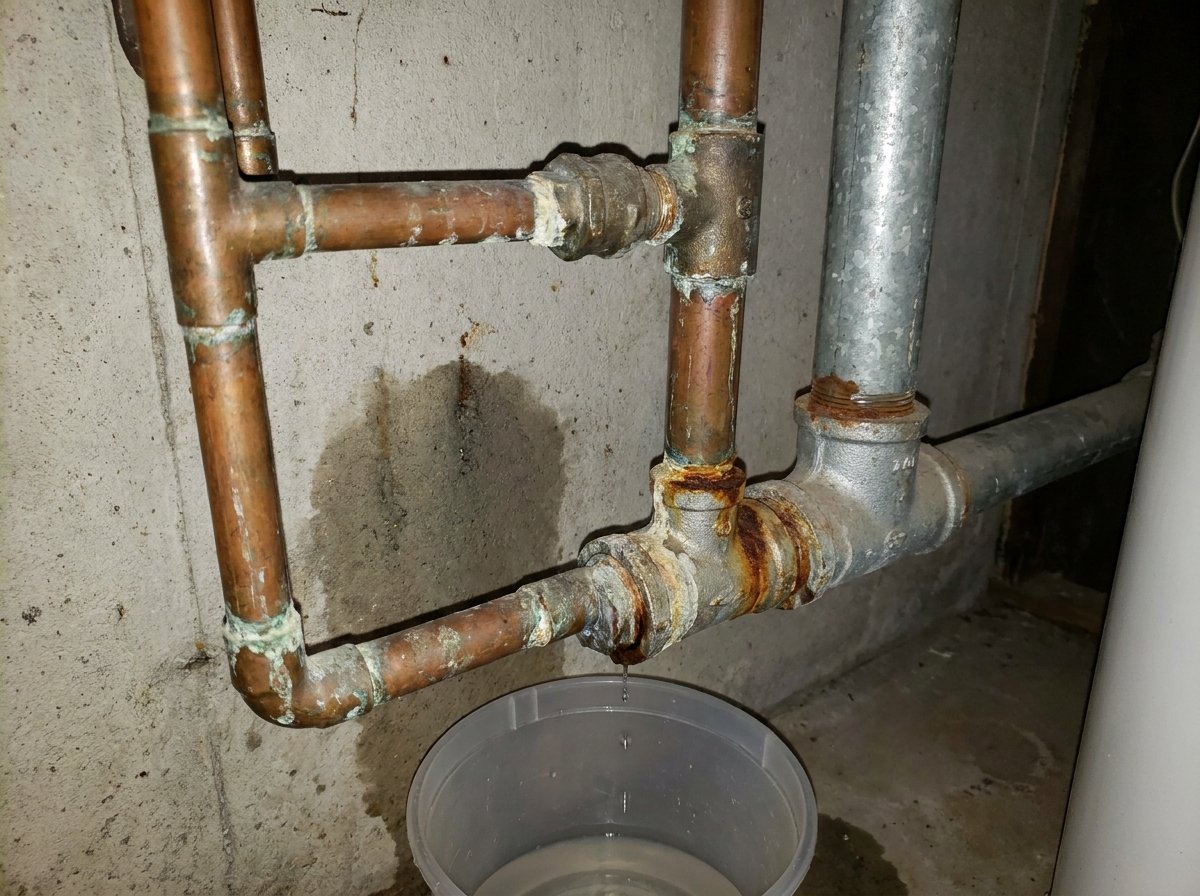
Repair or Replace: How to Make the Call
This is the question I hear most: should I fix it or replace it? The honest answer depends on the age, the material, and how often the pipe fails. One leak in a young copper pipe is usually a simple repair. But repeated leaks in old pipes mean the whole line is wearing out, and patching one spot just moves the problem down the line.
Leaks add up fast, and the numbers prove it. The EPA reports that household leaks waste nearly 1 trillion gallons of water nationwide each year, and the average home loses more than 9,300 gallons annually to leaks. Fixing those leaks can cut a water bill by about 10 percent, so acting early pays you back.
Use this simple guide to weigh your choice:
| Repair Makes Sense When… | Replace Makes Sense When… |
|---|---|
| The pipe is newer and in good shape | Pipes are old galvanized or lead |
| It’s a single, one-time leak | You’ve had leaks over and over |
| Damage is small and easy to reach | Water pressure is low all over |
| The material is still safe | Water looks rusty or tastes bad |
When repairs start piling up, replacing the line saves money in the long run. I’ve watched homeowners spend more on five small fixes than a full repiping would have cost. If a pipe runs under concrete or a driveway, sometimes rerouting it is smarter than digging. Our water line rerouting team can plan a new path that avoids costly demolition.
What a Professional Plumber Actually Checks
I’ve solved this exact problem hundreds of times, and a real inspection is nothing like a quick glance under the sink. When my team checks your water lines, we look at the full system from the water main to the farthest faucet. We test, we measure, and we listen. Guesswork has no place in good plumbing.
A proper inspection is thorough for a reason. In our experience, checking every access point catches roughly 9 out of 10 hidden problems before they turn into emergencies. Skipping steps is how small leaks slip by and become big repairs later. The EPA even suggests that a family of four using more than 12,000 gallons per month likely has a serious leak worth chasing down.
Here’s what a full water line check includes:
- Testing water pressure at several taps around the home
- Checking the water meter for hidden, silent leaks
- Looking at exposed pipes for rust, green stains, or drips
- Testing water color, taste, and smell for warning signs
- Inspecting the shut-off valve and main line connections
- Using leak-detection tools for pipes behind walls or under floors
A good plumber explains what they find in plain words, not scary jargon. You should always understand what’s wrong and why. If a pro can’t tell you the cause in simple terms, get a second opinion. Clear answers are a sign of real skill.
Simple Ways to Protect Your Water Lines
You can’t stop pipes from aging, but you can slow the damage and catch trouble early. Small habits make a big difference over the years. I always tell homeowners that a little attention now saves a lot of money later. Prevention is cheaper than repair, every single time.
Even tiny drips waste far more than people expect. The EPA points out that a faucet dripping just once per second wastes more than 3,000 gallons per year, and a leaky showerhead can waste over 500 gallons annually. Those small numbers add up to real money on your bill, so fixing drips fast is worth it.
Try these easy steps to protect your water lines:
- Learn where your main shut-off valve is, so you can act fast in an emergency
- Check under sinks once a month for damp spots or drips
- Watch your water bill and act on any strange jump
- Install a water softener if you have hard water and heavy mineral buildup
- Keep pipes warm in winter to prevent freezing and bursting
- Replace old toilet parts, like a worn flapper, every few years
Cold weather is a common pipe killer. Frozen water expands, and that pressure can split a pipe wide open. If you live where winters get harsh, insulate any exposed pipes before the first freeze. A few dollars of foam wrap can save you thousands in water damage.
When It Becomes an Emergency
In my professional experience, the difference between a small repair and a flooded home often comes down to how fast someone reacts. A burst pipe can dump gallons of water into your home in minutes. That’s not a “wait until Monday” problem. That’s a shut-the-water-off-right-now problem.
Speed truly matters here. Water damage spreads fast, and mold can begin forming in as little as 24 to 48 hours after a major leak. The longer water sits, the more it soaks into floors, walls, and wood. Acting in the first hour can save you thousands in repairs and protect your family’s health.
Call for emergency help right away if you see any of these:
- A pipe has burst and water is pouring out
- Water is coming up through the floor or a slab leak is flooding
- You smell sewage or see backup coming from drains
- Water pressure has dropped to almost nothing across the home
- A ceiling is sagging and dripping from a hidden leak
The first move in any water emergency is simple: shut off your main water main valve. Then call a pro. If you’re facing a burst pipe or fast leak, our emergency plumbing team is ready to respond and stop the damage before it spreads.
Final Thoughts
Your water lines work hard behind the scenes, and they always warn you before they fail. Low water pressure, brown water, rising bills, strange sounds, and wet spots are your home asking for help. The homeowners who catch these signs early save the most money and stress. The ones who wait usually pay far more.
You don’t need to be an expert to spot trouble — you just need to pay attention. Trust your eyes, your ears, and your nose. When something feels off with your water, it usually is. And when the signs point to a real problem in the pipes, bring in a pro who can find the true cause and fix it right.
If you’ve noticed any of these warning signs in your home, don’t guess and hope. Let’s take a look together and check your system the right way. You can reach out to our team to schedule an inspection and get honest answers about your water lines.
Frequently Asked Questions
How do I know if my water line is leaking underground?
Check your water meter with all water turned off. If it keeps moving, you have a hidden leak. Other clues include soggy spots in the yard, a jump in your water bill, and low water pressure. Underground leaks hide well, so a pro with leak-detection tools is your best bet for finding the exact spot fast.
Is brown or rusty water dangerous to drink?
Short answer: don’t drink it. Discolored water usually means rust and corrosion from old pipes are mixing into your supply. It can stain clothes and hurt appliances too. If your home has old galvanized pipes or lead pipes, the water may carry health risks, so get it tested and have the pipes checked right away.
How much does it cost to check for lead in my water?
According to the EPA, testing your water for lead usually costs between $20 and $100 through a certified lab. Lead is a real concern in homes built before 1986. Since you can’t see, taste, or smell it, testing is the only sure way to know. Your local water utility can point you to a certified testing lab.
How long do home water pipes usually last?
It depends on the material. Copper pipes often last 50 or more years, PEX pipes run 40 to 50 years, and old galvanized steel lasts 20 to 50 years before rusting through. If your pipes are near the end of that range or you see repeat leaks, it’s smart to plan for repiping before a big failure hits.
Should I repair my water line or replace it?
Repair a single leak in a newer pipe. Replace the line when it’s old, made of unsafe material, or leaks over and over. Repeated fixes cost more than one full replacement in the long run. A plumber can inspect the whole system and tell you honestly which choice saves you the most money and worry.