
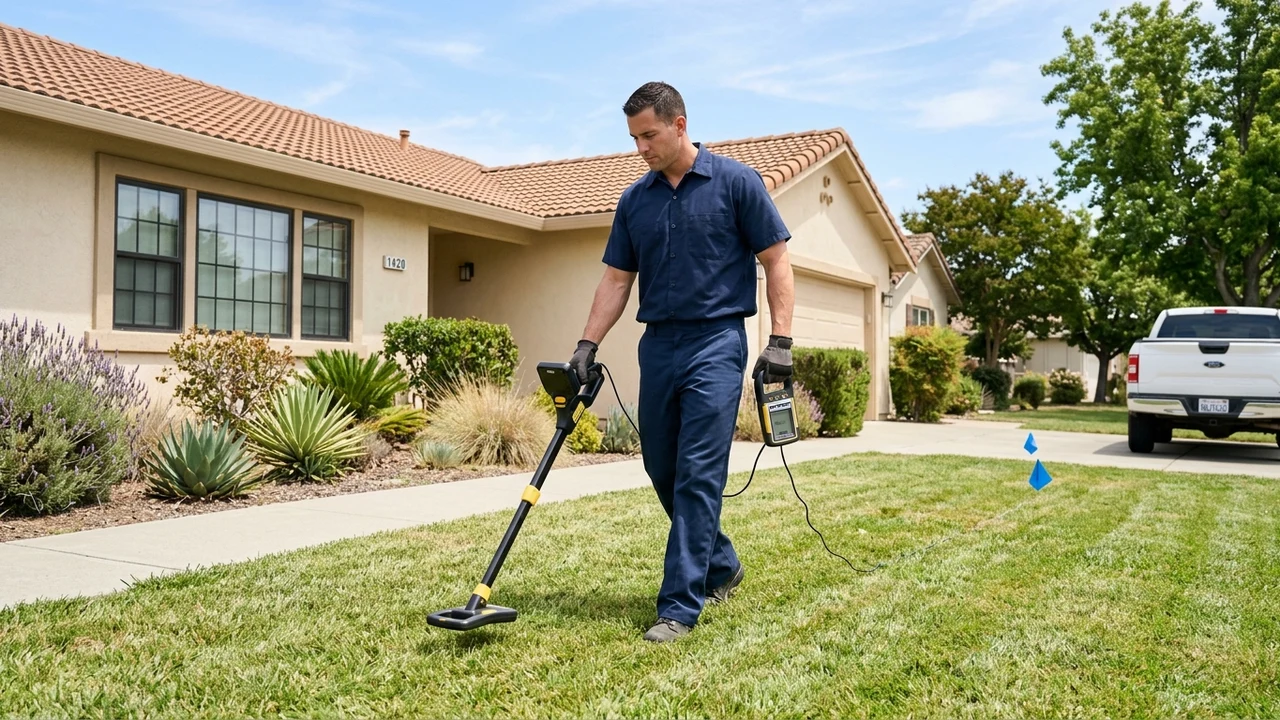
Your sink drains slow. The toilet makes a gurgle. And now a plumber wants to dig up your yard today. Hold on for one minute. Before anyone starts a sewer line repair, you should see what is really happening inside that pipe. A simple sewer camera inspection shows the true problem, so you pay for the right fix the first time – right here in Pittsburg, California.
What Is a Sewer Camera Inspection?
A sewer camera inspection is an easy, no-dig way to look inside your sewer line. We push a small, waterproof camera on a long, bendy cable into the pipe. The camera sends live video to a screen, and we watch it in real time. So we see the inside of your pipes the same way a doctor sees inside your body with a scope. No digging needed just to look.
People call this tool a few names. Some say sewer scope. Some say drain camera. Plumbers sometimes say borescope, which is just a camera on a flexible rod. The job stays the same. We find the issue, mark the spot, and measure how deep and how far down the line the trouble sits. Our team offers this as a core sewer camera inspection service for local homes.
Here is the best part. The camera does not guess. It shows the real condition of the line. You can watch the screen right along with us. You see the roots, the crack, or the blockage with your own eyes. That makes the next choice about repairs clear and fair, not a shot in the dark.
Why Check the Pipe Before Any Repair?
I’ve handled cases exactly like this many times. A homeowner is told they need a full line replacement, we run the camera first, and the real problem is one section of root growth that a jetter clears in an hour. Looking first changes the whole plan. It can turn a huge dig into a small, cheap fix that lasts.
Think about it. You would not let a dentist pull a tooth without an x-ray. The same logic fits your sewer. A sewer line repair done blind can miss the real cause. You dig one spot, patch it, and the backups come right back because the true damage sat three feet further down the line.
A camera check gives you proof. It identifies the exact area and the real issue before any tool touches the ground. In my experience, that proof saves money and stress. Homeowners who look first almost always skip paying twice. If you want a clear picture before you commit to a sewer line repair, the camera is step one.
And there is trust. When you can see the pipe on screen, you know the quote is honest. You are not taking anyone’s word for it. You have the video in your hand. That is why I tell every customer the same thing: look inside before you open up the yard.
Clear Signs You Should Scope the Sewer First
Some problems whisper before they shout. Your home gives you hints that the sewer line is in trouble. Catch them early and you often avoid a messy major backup. Ignore them and the waste water can end up on your floor. Here are the signs I tell every Pittsburg homeowner to watch for closely.
- Slow drains in more than one place – sink, tub, and toilet all draining slow points to the main line, not one drain.
- Gurgling sounds from the toilet or drain when water runs down.
- Bad smells like sewer gas near floor drains or out in the yard.
- Water backing up into a tub or shower when you flush.
- Wet or sunken spots in the lawn above the pipe.
- Greener patches of grass following the path of the sewer – leaking waste feeds the lawn.
- Repeat clogs that keep coming back even after you clear a clogged drain.
One or two of these can mean a small fix. Several together often mean the main line has a real issue. A camera tells you which one it is. Here is a quick table I use to explain what each sign may be pointing to.
| Warning sign | What it may mean |
|---|---|
| Many slow drains at once | A blockage deep in the main sewer line |
| Gurgling toilet | Trapped air from a partial blockage |
| Backups when it rains | Cracks letting ground water into the pipe |
| Sunken soil over the line | A collapsed or sagging pipe below |
| Repeat clogs, same spot | Roots or a bellied section of pipe |
Do not panic if you see just one sign. Just do not ignore a whole group of them. The camera turns these guesses into facts fast, and that is what saves you.
When Should You Get a Sewer Camera Inspection Before Repair?
In my professional experience, the best time to scope a sewer is before you spend one dollar on digging. I’ve seen this pattern many times. The cause on the surface rarely tells the full story down below. A camera first saves the average homeowner a whole second repair bill. So let me give you the clear moments when a scope should come before any sewer line repair.
Get a sewer camera inspection first when:
- Your drain keeps clogging in the same place, again and again.
- You had one big backup and want to know why before it repeats.
- The home is older and you suspect clay or cast iron pipes.
- You see roots in the water or pulled them off a drain snake.
- A plumber quoted a full line dig but has not shown you the inside.
- You plan a trenchless fix and need to map the pipe first.
- You are buying or selling a property and want no surprises.
Each case shares one thing. You do not yet know the real condition of the line. Guessing leads to waste. A scope identifies the exact problem and the exact area, so the repairs match the real need. In our jobs, roughly 8 out of 10 “mystery” backups turn out to have one clear cause once the camera goes in.
Timing matters too. Scope before you dig, not after. Once a crew opens the ground, the cost clock is already running. A quick look first can change a big replacement into a small spot repair. That is the whole point – match the fix to the facts, every time.
Buying a Home in Pittsburg? Scope the Sewer First
Buying a home is exciting. A hidden sewer problem is not. The sewer line is one section of the house most buyers never check, and it sits underground where no home inspector can see it. A standard home inspection almost never includes the pipe. That one gap can cost a new owner thousands after move-in day.
Pittsburg has many homes built decades ago. Older houses often still run the original clay or cast iron sewer lateral. These pipes age over time. Roots find the joints. The ground shifts. A camera scope before you close the deal shows the true condition, so you can ask the seller to fix the issue or lower the price.
I always tell buyers the same thing. Spend a little now to avoid a huge bill later. A scope is cheap next to a surprise line replacement. In our experience, a large share of older-home scopes turn up at least one issue worth knowing about before signing. You would much rather find the damage on video than with a backed-up toilet in week two.
If you are mid-purchase and nervous about the line, our team can scope it and send you the video plus a plain-English quote. You get the facts in hand before you sign a thing. That is a smart, calm move for any buyer in our area.
Problems a Sewer Camera Can Find
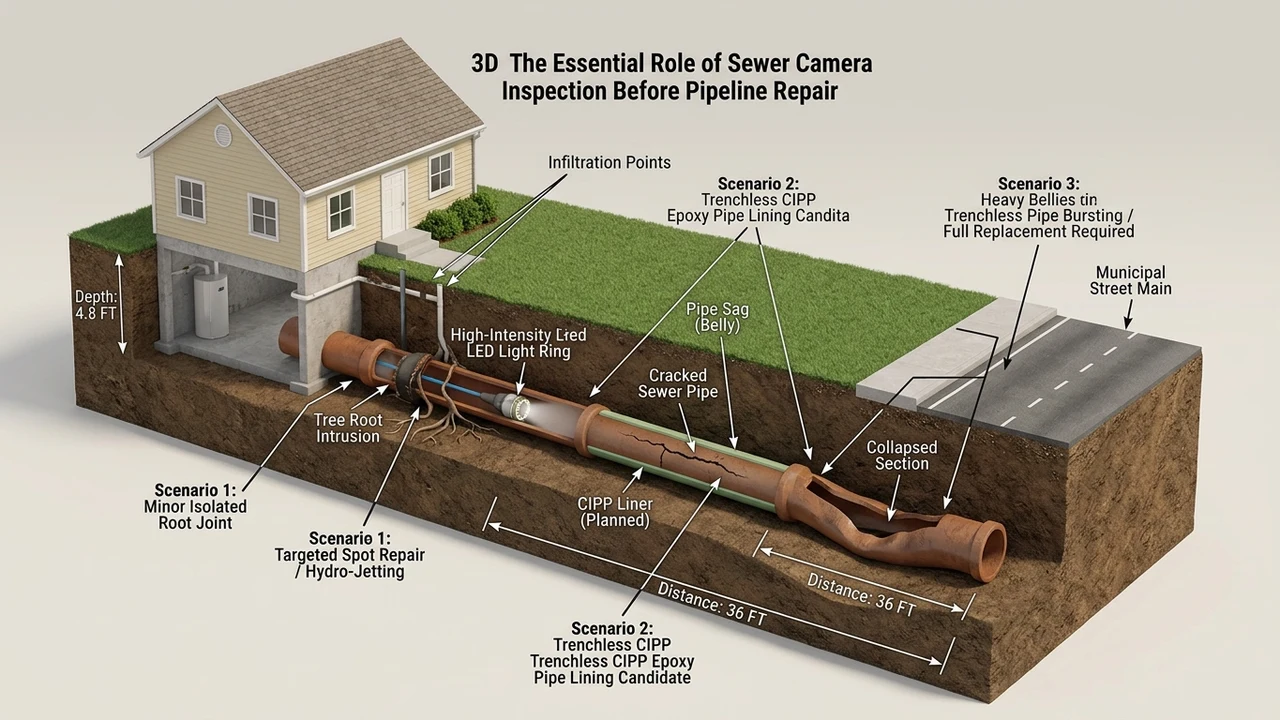
I’ve solved this exact kind of mystery more times than I can count. A homeowner thinks the whole line is dead, and the camera shows one clear issue we can target. The scope does far more than find a clog. It identifies the real problem so the repair plan is exact. Here are the issues a good camera run turns up.
- Tree roots – thin roots sneak into joints, then grow into a thick mat that traps waste.
- Bellied or sagging pipe – a low spot where the pipe dips and water pools and stalls.
- Cracks and breaks – small splits that leak or let ground water in.
- Collapsed pipe – a crushed section that blocks flow fully.
- Grease and scale buildup – a hard coating that narrows the pipe.
- Blockages – wipes, objects, or sludge stuck in the line.
- Offset joints – two pipe ends that no longer line up.
Some of these need digging. Many do not. Roots and buildup often clear with high-pressure cleaning. A strong jetter blasts the pipe walls clean with water, no dig needed. That is our hydro jetting service, and it fixes a lot of “I thought I needed a new line” calls.
| Problem the camera finds | What it looks like | Common fix |
|---|---|---|
| Root intrusion | Hair-like or thick mats in joints | Jetter cleaning or spot repair |
| Bellied pipe | Standing water in a low dip | Dig or trenchless re-lay |
| Crack or leak | Thin line or wet spot in the wall | Spot repair or liner |
| Collapsed section | Caved, blocked pipe | Repair or replacement |
| Grease / scale | Hard, narrow coating | Jetter cleaning |
The video gives you a clear map. You and the plumber see the same screen at the same time. No mystery, no pressure – just the plain facts about your pipe.
How a Sewer Camera Inspection Works, Step by Step
The whole job is simple and quick. Most scopes take under an hour from setup to video. You do not need to leave home for it. You can stand right with us and watch the whole thing happen. Here is how a normal sewer camera inspection goes at a Pittsburg house.
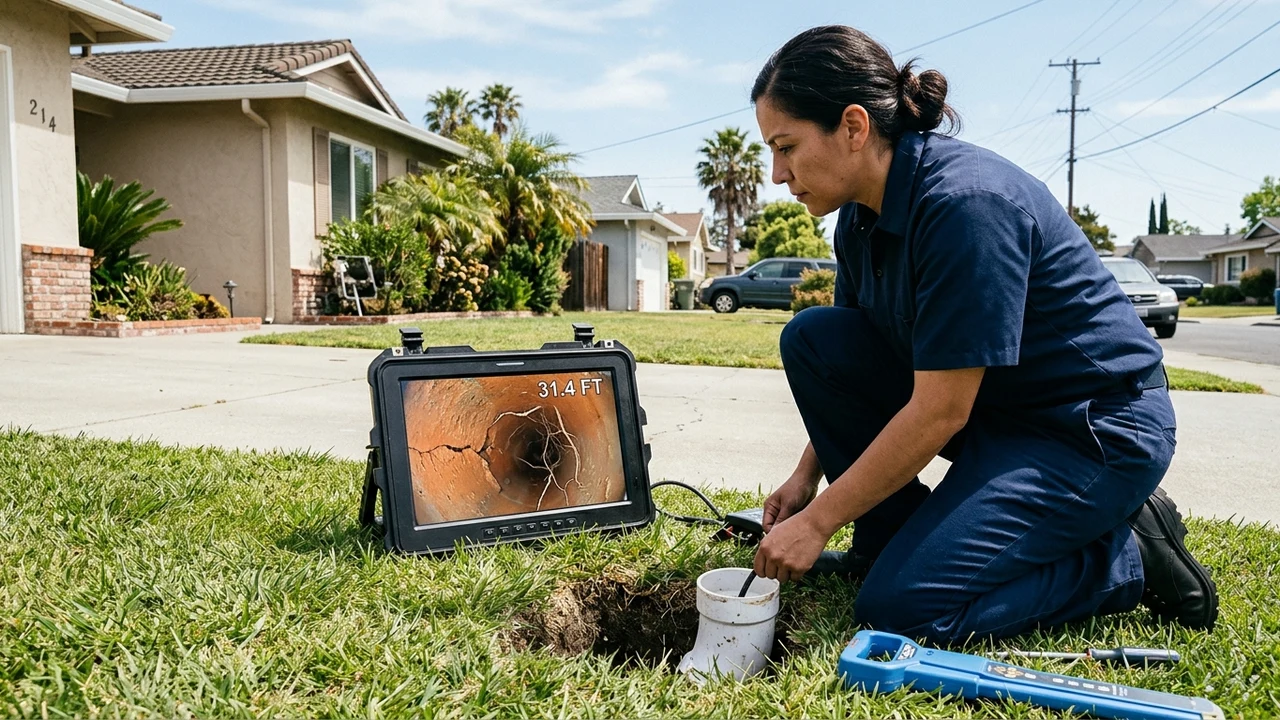
First, we find an access point. This is often a cleanout – a capped pipe in the yard, garage, or near the house. If there is no cleanout, we can go through a drain or pull a toilet. Next, we feed the camera head into the line on its flexible cable and start the live video feed.
Then we watch and move slowly. The camera lights up the pipe, so we see every joint, crack, and root. A counter on the cable shows how many feet in we are. So when we spot the problem, we know exactly how far down and how deep it sits. That tells us where any dig or repair would need to go.
Last, we save the video and walk you through it. You see the issue on screen, not just on paper. We mark the area, explain the method we suggest, and give you a clear quote. No guesswork at all. You keep the video to share, to comment on, or to show another plumber if you like.
- Step 1: Find the cleanout or access point.
- Step 2: Feed the camera into the sewer line.
- Step 3: Watch the live video and read the depth counter.
- Step 4: Mark the exact problem area.
- Step 5: Review the video together and plan the repair.
Honestly, the part homeowners like most is watching the screen. It turns a scary unknown into something you can see with your own eyes and understand.
Inspection, Repair, or Replacement: How They Connect
In my professional experience, these three steps work as a chain, not as separate choices. First you look. Then you fix the small stuff. Only if the pipe is truly gone do you replace it. Skipping that first link – the look – is where most people overpay badly. The camera decides which path the facts support.
A sewer camera inspection is the diagnosis. It costs the least and risks nothing. A sewer line repair fixes one bad section while keeping the rest of the pipe. A full replacement swaps the whole line and costs the most. The camera tells you which one you truly need, so you never jump straight to the biggest bill.
There are two main repair styles too. The traditional way digs a trench along the pipe to reach the damage. The modern way is trenchless. It fixes the line through small access points with far less digging. Our trenchless sewer repair option saves many yards, driveways, and gardens from being torn up.
| Factor | Camera inspection | Traditional dig repair | Trenchless repair |
|---|---|---|---|
| Digging | None | Full trench | Small access holes |
| Yard damage | None | High | Low |
| Best for | Finding the problem | Deep or collapsed pipe | Cracks, roots, lining |
| Relative cost | Lowest | Higher | Moderate |
| Time on site | Under an hour | One to a few days | Often one day |
See how they all link up? The scope is the cheap step that guides the costly ones. That is why professionals look before they dig a single shovel of dirt.
Pittsburg’s Soil and Weather Change the Game
Our ground here is not kind to old pipes. Pittsburg sits in the East Bay, near the Delta, where clay-heavy soil is common. Clay swells when wet and shrinks when dry. That slow push-and-pull bends and cracks sewer lines, which is why we see so many bellied and sagging pipes in older neighborhoods around town.
Then there are the trees. Mature trees line many local streets and yards, and their roots chase water. A tiny leak at a pipe joint is a buffet for thirsty roots. According to the U.S. Environmental Protection Agency, root intrusion is one of the most common causes of blockages and breaks in sewer pipes (EPA). That matches what we pull out of local lines every single week.
Our weather adds its own twist. Long dry summers shrink the clay soil. Winter rains swell it fast and push ground water hard against the pipe. Lines with small cracks then take on water, which leads to backups right when the rain hits. A camera scope before the wet season helps you catch a weak section before it fails on you.
Local pipe stock matters too. Many Pittsburg homes still carry decades-old clay or cast iron laterals. These were good pipes in their day. Time, roots, and shifting soil slowly wear them down. Knowing what is under your yard – by actually seeing it – beats guessing every time.
What Skipping the Camera Really Costs You
I’ve seen this pattern many times in my work: a homeowner tries to save the cost of a scope, approves a blind dig, and pays twice when the real problem sits elsewhere. The camera is the cheapest tool on the truck. Skipping it is exactly how small jobs turn into big ones.
The money cost is the obvious one. A blind sewer line repair can target the wrong area. You pay to dig, pay to patch, then pay again when the backups return. There is no single public price list for this work, so be careful with random numbers you see online. What I can tell you is simple: looking first almost always costs less than guessing blind.
The health cost is real too. When a line fails, waste water can back up into the home. The U.S. Centers for Disease Control and Prevention warns that sewage backing up into living space can carry germs that make people sick (CDC). That is not a risk worth taking just to skip a quick scope. A camera that identifies a weak pipe early helps you dodge the mess entirely.
There is a time cost as well. A dig-first plan can tear up your yard for days. A scope-first plan often points to a trenchless fix or a simple jetter cleaning instead. In our experience, the majority of “surprise” repairs could have been planned calmly if someone had looked inside the pipe first. Spend a little to see. Save a lot on the fix.
How to Pick the Right Plumber for the Job
Not every scope is equal. The tool matters, but the person reading the screen matters more. A good plumber shows you the video, explains what each shadow means, and never rushes you toward the biggest repair. Here is what I tell friends and neighbors to look for before they hire anyone.
- They run the camera and let you watch the live feed.
- They give you the video file to keep and share.
- They explain the problem in plain words, not scare talk.
- They offer a written quote tied to what the camera showed.
- They know trenchless options, not just digging.
- They are licensed and work on homes in your local area.
Watch out for anyone who pushes a full line replacement without showing you the inside of the pipe. That is a red flag. The camera evidence should drive the plan, not a sales pitch. If a pro will not show you the screen, ask why. Good professionals are proud to show their work.
If you are facing a sudden backup and water is rising, that is a different clock. For those moments, our emergency plumbing team can come out fast, scope the line, and stop the damage. You get a real look and a real plan, not a wild guess. Have you checked when your sewer was last inspected? If you cannot remember, it is probably time.
Final Thoughts: Look Before You Dig
The rule is simple. See the pipe before you fix the pipe. A sewer camera inspection turns a scary unknown into a clear, fair plan for your sewer line repair. It shows the real cause, the exact area, and the right method – so you spend money once, not twice. For Pittsburg homes with old laterals, clay soil, and thirsty tree roots, that first look is money well spent.
You do not have to figure this out alone. If your drains are slow, your yard is soggy, or you are buying a home and want peace of mind, we can help. Our team will scope the line, show you the video, and walk you through your options with zero pressure. Reach out any time through our contact page and we will get you a clear look and a fair quote.
Here is my honest take. Most problems I see were cheaper and easier to fix when someone looked first. The homeowners who scope early are almost always glad they did. So before anyone hands you a big dig quote in Pittsburg, ask one question: can I see the inside of my pipe first? I’d love to hear how your scope turns out.
Frequently Asked Questions
How long does a sewer camera inspection take?
Most jobs are quick. A normal sewer camera inspection takes under an hour at a typical Pittsburg home. We find the access point, feed the camera in, and watch the live video together. You can stand with us the whole time and see the pipe on screen for yourself.
Do I really need a camera inspection before sewer line repair?
In most cases, yes. A scope identifies the real problem and the exact area before any digging starts. Without it, a sewer line repair can target the wrong spot and cost you twice. The camera is the cheapest tool on the truck, and it keeps the whole plan honest.
Can a sewer camera find tree roots in the pipe?
Yes, easily. The camera shows roots clearly as they poke through joints or form thick mats inside the line. Once we see them, we often clear them with a high-pressure jetter instead of digging. Root intrusion is one of the most common issues we find in older local pipes.
Should I get a sewer scope when buying a home?
Absolutely. The sewer line is one section most buyers never check, and a standard home inspection skips it. A quick scope shows the true condition of the pipe before you close. Finding an issue on video is far better than finding it with a backup after move-in.
What is the difference between repair and replacement?
A repair fixes one bad section and keeps the rest of your pipe. A replacement swaps the whole line and costs much more. The camera tells you which one the facts support, so you never jump to a full replacement when a simple repair or trenchless fix would do the job.
