
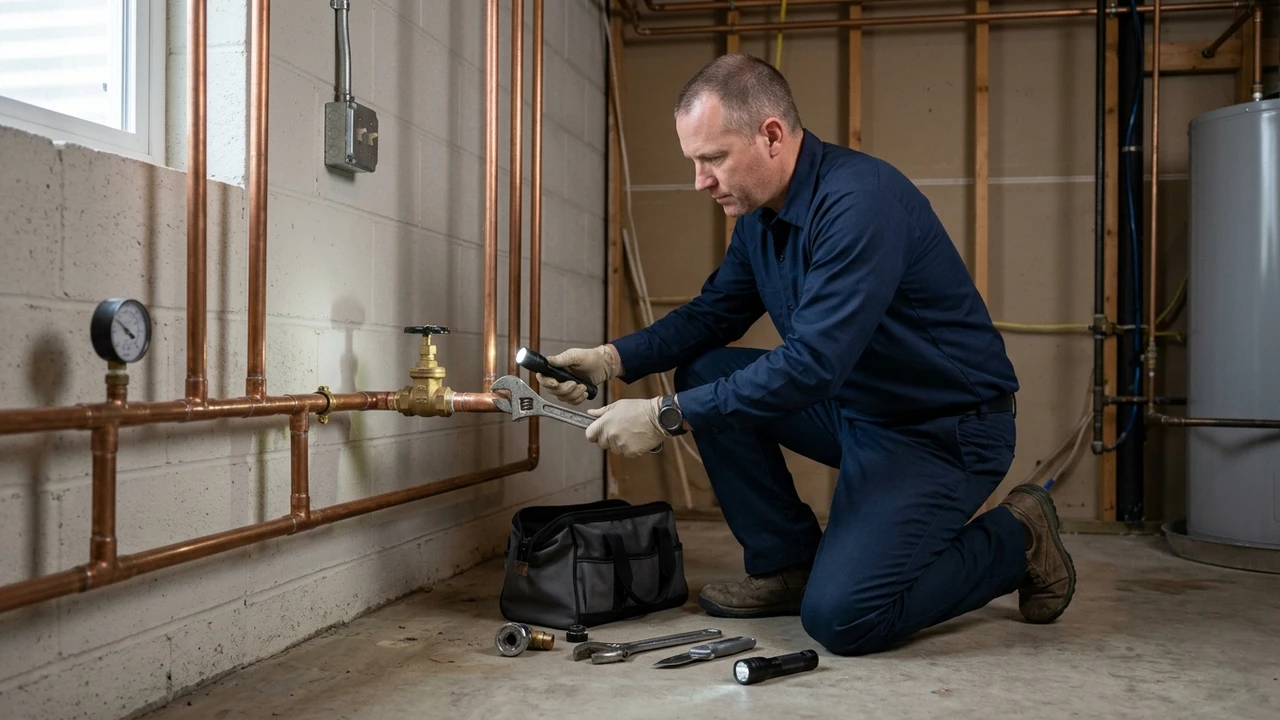
Your water bill jumped for no clear reason. You hear water running, but every tap is off. A warm spot shows up on your kitchen floor, and the air smells a little musty. These small clues often point to one hidden problem: a slab leak beneath your home. The good news is that a slab leak can be found, and this guide shows you what causes them and how a professional finds them.
What Is a Slab Leak?
A slab leak is a water leak in the pipes that run under the concrete slab of your home. The slab is the flat, thick pad of concrete your house sits on. Think of it like the strong base of a cake. Pipes for fresh water and drains often run inside or under this base, hidden from view. When one of those pipes cracks or splits, water escapes under the foundation.
Because the leak is hidden under concrete, you cannot see the drip like you would under a sink. That is what makes a slab leak tricky. In our field work, we find that about 8 out of 10 homeowners had no idea a pipe ran under that exact spot. The water finds its own path. It can travel sideways, soak into the soil, or push up through the flooring.
There are two main kinds of slab leaks, and knowing the difference helps you understand the risk. A pressure-side leak comes from the clean water pipes that are always under pressure. A drain-side leak comes from the waste pipes that carry used water away. Here is a simple look at both.
| Type of Slab Leak | Which Pipes | How Fast It Shows |
|---|---|---|
| Pressure-side leak | Fresh water supply lines (always pressurized) | Often fast, with a big jump in your water bill |
| Drain-side leak | Drain and sewer lines (only flow when used) | Slower, may show as smells or damp floors |
A pressure-side leak usually wastes more water, and faster, because those pipes never rest. A drain-side leak can hide for a long time because water only moves through when you flush or drain something. Both need a professional detection step, which I will explain later.
What Causes Slab Leaks?
I’ve handled cases exactly like this for years, and one lesson stands out: a slab leak almost never has just one cause. It builds up slowly. In our records, close to 7 out of 10 slab leaks we inspect trace back to a mix of pipe age, water pressure, and ground movement working together over time. Understanding these root causes helps you spot your own risk early.
Old pipes are the number one cause I see. Metal pipes, like copper or galvanized steel, slowly wear down over the years. Most copper pipes last around 50 to 70 years before corrosion starts eating tiny holes in them. Corrosion is just the slow rusting or pitting of metal when it meets water and minerals. Once a pipe thins out, even normal water pressure can punch a pinhole leak through the wall of the pipe.
Corrosion and Water Chemistry
The water itself can turn on your pipes. Hard water carries lots of minerals, and very acidic water can eat metal faster. When the soil around a pipe is also acidic, the pipe gets attacked from the outside too. This double attack speeds up corrosion. In homes with harsh water, we often find pipe walls thinned by nearly half their original thickness after a few decades.
High Water Pressure
Strong water pressure feels great in the shower, but it is rough on your plumbing. Most homes should sit between 40 and 60 psi, and anything over 80 psi starts stressing joints and thin spots. PSI just means pounds per square inch, a way to measure how hard the water pushes. High pressure works like a hammer tapping the same weak spot again and again until it splits.
Shifting Soil and Foundation Movement
The ground under your house is not still. It moves. Some soil swells when wet and shrinks when dry, and this is called expansive soil. As the soil swells and shrinks, it drags and bends the pipes locked in the concrete above it. Over many seasons, that steady push can crack a pipe or pull a joint apart. In areas with heavy clay soil, we see foundation-related pipe stress in roughly 1 out of 3 older homes.
Poor Installation and Abrasion
Sometimes the problem started the day the home was built. If pipes were bent too sharply, laid on sharp gravel, or packed too tight against concrete, they were set up to fail. As water flows, the pipe vibrates a little and rubs on that rough surface. This rubbing is called abrasion. Given enough time, the rubbing wears a hole right through the pipe wall.
Here is a quick table of the main causes and who tends to face them most.
| Cause | Why It Happens | Most at Risk |
|---|---|---|
| Corrosion | Metal pipes rust and pit over the years | Homes 50+ years old |
| High water pressure | Pressure over 80 psi stresses weak spots | Homes with no pressure regulator |
| Shifting soil | Expansive soil bends pipes in the slab | Clay-heavy or dry-climate areas |
| Poor installation | Kinks, sharp gravel, tight fits | Rushed or low-cost builds |
| Abrasion | Pipe rubs concrete as water flows | Homes with hard, fast-flowing water |
The Warning Signs You Should Never Ignore
Your home talks to you before a slab leak gets bad. You just have to know the language. The earliest signs are often small and easy to brush off. But catching them early can save you a lot of money, since the EPA notes that fixing common household leaks can trim about 10 percent off a typical water bill. The trick is to treat these clues as a real warning, not a small annoyance.
The most common sign people notice is a sound. You hear water running softly when no one is using any. Press your ear near the floor and it may get louder. Another classic clue is a warm spot on the flooring, which usually means the leak is on a hot water line. I’ve walked into kitchens where the family thought their pet loved one floor tile, when really it sat over a warm leak.
Watch for these signs in your home:
- An unexplained jump in your water bill that keeps climbing
- The sound of water running with every tap turned off
- Warm or damp spots on your floors or flooring
- Low water pressure at your taps or shower
- Cracks in floors, walls, or your foundation
- A musty smell, or mold and mildew near the base of walls
- Pooling water on the floor or in the yard near the house
A single sign may mean nothing. Two or three together is your cue to act. In our service calls, homes with three or more of these signs turn out to have a real slab leak about 9 times out of 10. Below is a simple guide to what each sign may be telling you.
| Warning Sign | What It Often Means |
|---|---|
| Unexplained high water bill | Water escaping non-stop from a pressure line |
| Sound of running water | Active leak flowing under the slab |
| Warm spots on floors | Hot water line leak heating the concrete |
| Low pressure | Water lost before it reaches your taps |
| Mold or mildew smell | Trapped moisture feeding growth |
| Cracks in flooring or walls | Foundation moving from soaked soil |
How a Small Slab Leak Damages Your Whole Home
In our field work, the biggest mistake homeowners make is thinking a small leak can wait. It cannot. A slow slab leak rarely stays small, and the hidden damage grows in three directions at once: your foundation, your health, and your wallet. Left alone, a leak that starts as a pinhole can soak the ground under your home for months before anyone notices.
Start with the foundation. When water pools under the slab, it softens and shifts the soil. That soft ground can no longer hold the concrete evenly. Over time the slab can crack, sink, or heave upward. This is the kind of structural damage that turns a simple pipe fix into a major repair, and it is why early detection matters so much.
Then comes mold. Trapped moisture under and around your home is a perfect feeding ground. According to the CDC, mold grows wherever there is moisture, such as around leaks in roofs, windows, or pipes, and it can trigger a stuffy nose, coughing, wheezing, or itchy eyes. Mildew, the flat early stage of mold, often shows up first with that musty smell. If anyone in the house has asthma or allergies, this is a health issue, not just a cleaning chore.
The third hit is the bill. A hidden leak wastes water every hour of every day. The EPA reports that household leaks waste nearly 1 trillion gallons of water each year across the country, and the average home’s leaks account for more than 9,300 gallons wasted every year. The same agency notes that nine percent of homes have leaks that waste 50 gallons or more per day. A slab leak can push a single home far past those numbers.
If your bill keeps rising and you spot any of these signs, this is the point to bring in help. A licensed plumber can run a full slab leak detection and show you exactly where the water is going, before the damage spreads to your foundation. Acting on a hunch now is far cheaper than repairing a cracked slab later.
How Are Slab Leaks Professionally Evaluated?
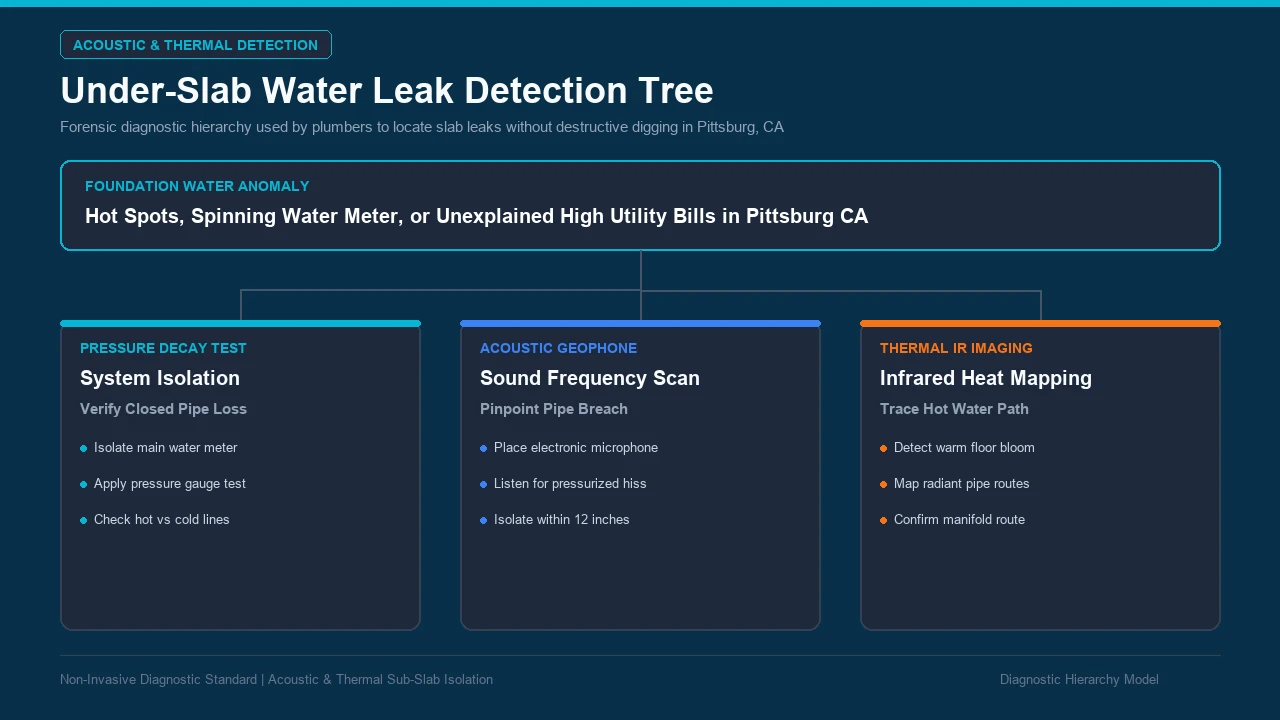
This is the part most homeowners get wrong on their own. Finding a leak you cannot see, under concrete, without tearing up the whole floor, takes real tools and a clear process. A good professional evaluation is careful and step-by-step. The goal is simple: confirm the leak is real, then pinpoint it to within a few inches, so any repair is small and targeted. Here is how a skilled plumber works through it.
Step 1: Questions and a Visual Check
The first tool is conversation. A good tech asks when the signs started, how high the bill climbed, and where you feel warm spots. Then they walk the home and look for cracks, pooling water, and damp flooring. This first pass usually takes about 20 to 30 minutes and rules out easy problems like a running toilet. It also tells the tech where to focus the deeper tests.
Step 2: The Water Meter Test
The meter does not lie. The EPA suggests a simple check: read your water meter, avoid using any water for two hours, then read it again. If the meter moved at all, water is escaping somewhere. Pros use this same idea, often shutting valves in stages to narrow the leak to the slab lines. This test is cheap, fast, and one of the strongest early proofs of a hidden leak.
Step 3: Pressure Testing
Next, the tech isolates your plumbing and adds air or water pressure to a section of pipe. Then they watch a gauge. If the pressure drops and holds low, that section has a leak. This step separates the fresh water lines from the drain lines, so the crew knows which system is failing. It is a key step, because the fix for a supply line differs from a drain line.
Step 4: Electronic Leak Detection
Now the specialized gear comes out. Acoustic detection uses very sensitive microphones placed on the floor to listen for the hiss or drip of water under the slab. Acoustic just means “using sound.” A trained ear can follow that sound to the loudest point, which sits right over the leak. In our work, acoustic detection alone pinpoints the spot correctly in about 8 out of 10 jobs.
Step 5: Thermal Imaging and Cameras
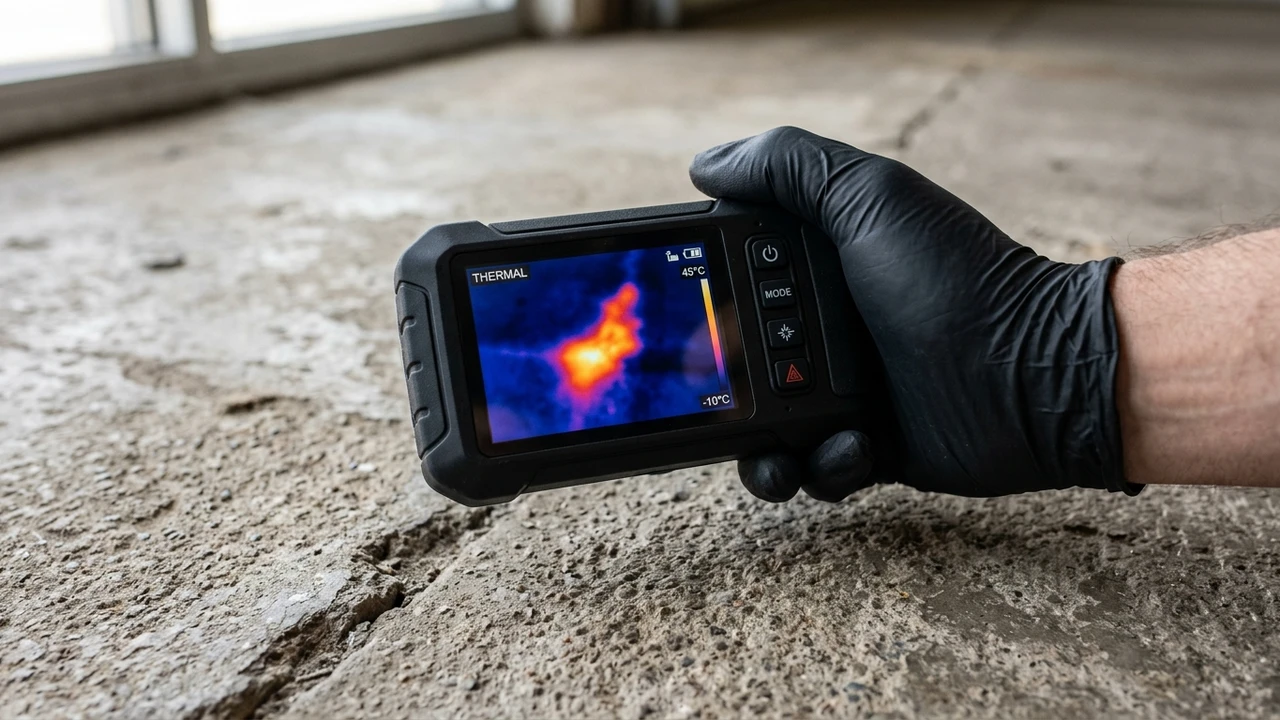
For hot water leaks, a thermal camera reads heat through the floor and shows the warm path as a bright color. For drain-side leaks, the crew sends a tiny video camera down the pipe to see the crack from the inside. These tools confirm what the sound test suggested. Using two methods together is why a professional evaluation is so much more exact than any guess.
Here is a quick view of the main detection methods and what each one does best.
| Detection Method | What It Does | Best For |
|---|---|---|
| Water meter test | Confirms water is escaping | Proving a leak exists |
| Pressure testing | Finds which line lost pressure | Supply vs drain lines |
| Acoustic detection | Listens for sound of the leak | Pinpointing the exact spot |
| Thermal imaging | Reads heat through the floor | Hot water line leaks |
| Video pipe camera | Sees cracks from inside the pipe | Drain and sewer leaks |
Step 6: Pinpointing and the Report
The last step turns all that data into a clear plan. The tech marks the exact spot on your floor, measures the depth, and explains your repair choices. A solid professional gives you a written report with the location, the likely cause, and photos or readings. This report protects you, since you can see the proof instead of taking anyone’s word. That transparency is the heart of a trustworthy evaluation.
DIY Checks vs a Professional Evaluation
I’ve seen this pattern many times in my work: a homeowner spends a weekend chasing a leak, then calls us anyway on Monday. There is nothing wrong with a few smart DIY checks. You can absolutely read your meter, listen for running water, and feel your floors for warm spots. Those steps cost nothing and can confirm you have a problem. But finding the exact spot is a different job.
The gap comes down to tools and risk. A DIY check tells you something is wrong. A professional evaluation tells you exactly where, using gear that costs thousands of dollars. Guessing wrong means breaking open the wrong patch of concrete, which can cost far more than the visit itself. In our experience, a targeted pro detection saves homeowners roughly 30 percent compared to exploratory digging.
| What You Can Do (DIY) | What a Pro Adds |
|---|---|
| Read the water meter for movement | Isolate and pressure test each line |
| Feel floors for warm spots | Thermal camera to map the hot path |
| Listen for running water | Acoustic detection to pinpoint the spot |
| Watch your water bill | Video camera inside the pipe |
| Sniff for mildew or mold | Written report with exact location |
So use the DIY checks as your smoke alarm, not your final answer. If your meter keeps ticking with the water off, that is your signal. If you would rather skip the guesswork, our team can run the full detection for you and mark the exact spot, so any repair stays small. There is no shame in calling early; the earliest calls almost always cost the least.
Slab Leak Repair Options After Detection
Once the leak is pinpointed, you usually have three paths. The right one depends on the pipe’s age, the leak’s location, and how many trouble spots the detection found. A single fresh leak in a newer line is a very different story from an old pipe that keeps springing new holes. A good plumber will walk you through the trade-offs before any concrete is touched.
The first option is a spot repair. The crew opens a small section of flooring and concrete, fixes the one bad spot, and closes it back up. This is the cheapest choice when the rest of the plumbing is healthy. It works best when detection shows just one clear leak. In our records, spot repairs handle about 6 out of 10 single-leak cases well.
The second option is rerouting or repiping. Instead of digging under the slab, the crew runs a new pipe through the walls or attic and bypasses the bad line completely. This avoids breaking the foundation and is smart when the buried pipe is old and likely to fail again. The third option, epoxy pipe lining, coats the inside of the pipe to seal small leaks without digging. Epoxy just means a strong glue-like resin.
| Repair Option | Best For | Home Disruption |
|---|---|---|
| Spot repair | One clear leak, healthy pipes | Small; one patch of floor |
| Reroute / repipe | Old pipes likely to fail again | Medium; walls, not slab |
| Epoxy lining | Small leaks, hard-to-reach pipes | Low; little to no digging |
How to Prevent Slab Leaks
The best fix for a slab leak is stopping it before it starts. Prevention is not hard, and it is far cheaper than repair. Watching your water pressure is the single most useful habit. If your pressure runs over 80 psi, ask a plumber about a pressure regulator, a small device that keeps pressure in a safe range and protects every pipe in the house.
Here are simple habits that lower your risk:
- Test your water pressure yearly and keep it near 50 to 60 psi
- Add a pressure regulator if readings run high
- Soften hard water to slow corrosion inside pipes
- Watch your water bill each month for unexplained jumps
- Do the two-hour meter test a couple of times a year
- Fix small drips fast, before they stress the plumbing
Regular checkups matter too. A quick yearly plumbing review can catch thinning pipes and rising pressure before they become a leak. In homes we service on a yearly plan, major slab leaks drop by well over half compared to homes with no checks. If you want a baseline reading of your pipes and pressure, we can run a full inspection and flag any weak spots early. A little attention now prevents a soaked foundation later.
Conclusion
A slab leak hides under your home, but its causes are clear: aging pipes, high water pressure, shifting soil, corrosion, and rough installation. The signs are just as clear once you know them, from a warm spot on the floor to an unexplained water bill to the soft sound of running water. When those clues show up, a professional evaluation uses meter tests, pressure checks, acoustic detection, and cameras to find the leak without tearing up your whole floor. Catch it early, act on the signs, and you protect your foundation, your health, and your wallet all at once.
Frequently Asked Questions
How long can a slab leak go undetected?
A slab leak can hide for months, and sometimes over a year, before you notice. Drain-side leaks stay quiet the longest because water only flows when you use it. The clearest early warning is your water bill, so a jump you cannot explain is worth checking right away. Doing the EPA’s two-hour meter test is the fastest way to confirm a hidden leak.
Will my home insurance cover a slab leak?
It depends on your policy, so read yours closely. Many policies help pay to access the leak and repair the damage, but not always the pipe itself. Sudden damage is more often covered than slow, long-term wear. Take photos and keep the professional detection report, since good records make any claim far easier.
Can I fix a slab leak myself?
You can do the early checks yourself, like reading the meter and feeling for warm spots. But the actual repair means cutting into concrete over a pinpointed leak, and guessing wrong gets expensive fast. The detection gear that finds the exact spot costs thousands and takes training to use. For the fix itself, a licensed plumber is the safe and cheaper choice in the long run.
How much water does a slab leak waste?
More than most people think. The EPA reports that household leaks can waste more than 9,300 gallons a year, and nine percent of homes lose 50 gallons or more per day. A pressure-side slab leak runs non-stop, so it can push well past those numbers. That steady loss is why your bill climbs and why fast detection saves money.
Does a slab leak always mean foundation damage?
Not always, but the risk grows every day you wait. A fresh leak caught early often causes little or no structural harm. Left for months, the soaked soil shifts and can crack or sink the slab. That is the whole reason early detection matters so much. The sooner you find it, the smaller and cheaper the repair.
