
Experiencing a sewer line backup is one of the most disruptive and unsanitary emergencies a homeowner can face. When raw sewage or wastewater bubbles up through downstairs floor drains, bathtubs, or toilets, the immediate instinct is to clear the immediate stoppage with a mechanical snake or chemical drain cleaner. However, when backups happen repeatedly – every few months or following heavy rainfall – the issue is rarely a simple isolated clog of household debris. Recurrent sewer lateral backups point to systemic mechanical failures buried beneath the yard, driveway, or foundation.
For homeowners and property managers across Pittsburg, California, and surrounding East Contra Costa County communities including Antioch, Oakley, and Brentwood, subterranean drainage systems face unique geotechnical stresses. From mature root systems seeking moisture during dry California summers to shifting expansive clay soils in the Delta basin, identifying the true root cause requires advanced diagnostic methodology rather than repetitive temporary plunging.
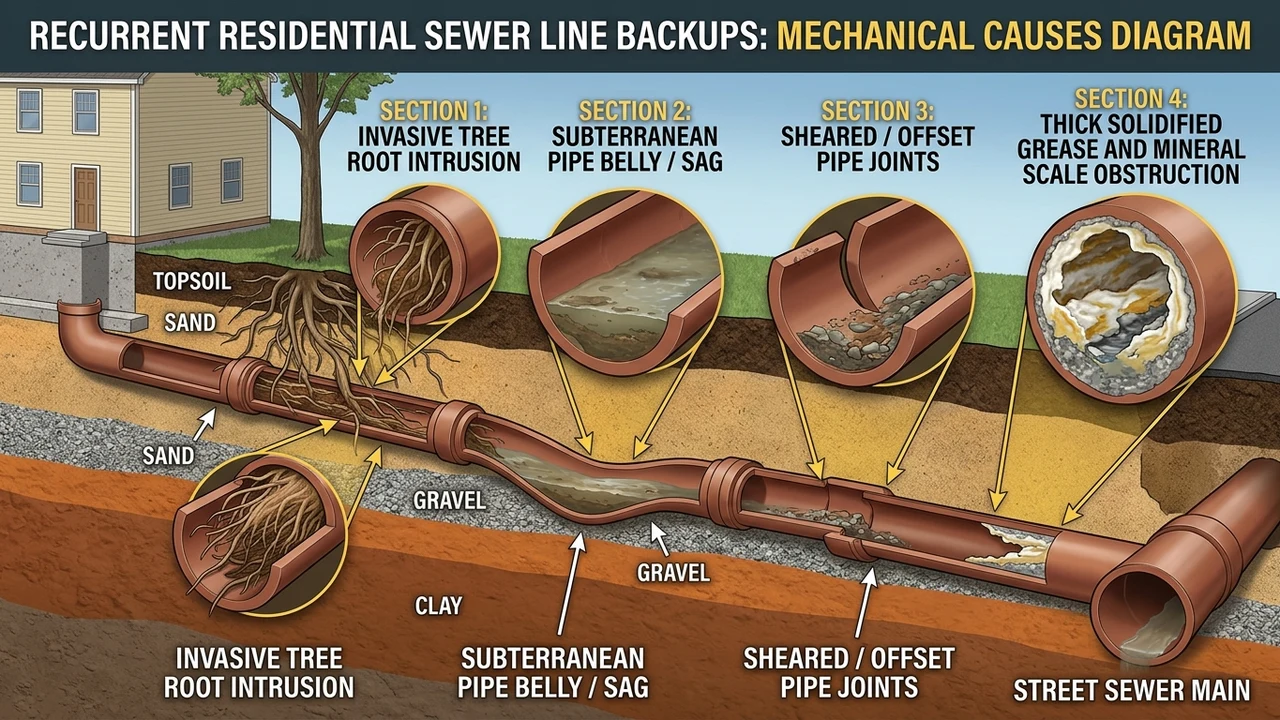
1. Invasive Tree Root Intrusion at Lateral Joints
In older residential neighborhoods in Pittsburg and East County, sewer laterals were predominantly installed using vitrified clay pipe (VCP) or cast iron segments fitted together in short four-foot to five-foot lengths. While vitrified clay is chemically inert and impervious to corrosive sewer gasses, the mortar or asphaltic compound used to seal the joints inevitably deteriorates over several decades.
Tree roots naturally follow subterranean moisture gradients and thermal vapor escaping from micro-fissures in aged pipe joints. Once hair-like feeder roots penetrate the mortar seal, the nutrient-rich wastewater inside the line stimulates rapid biomass expansion. Within months, fine roots blossom into dense, woody root mats that trap toilet paper, hair, and cooking fats. While a standard mechanical drain snake might punch a temporary two-inch hole through the center of the root mass to restore emergency drainage, the root structure remains intact inside the pipe walls, regrowing into an impenetrable dam within sixty to ninety days.
2. Subterranean Pipe Bellies and Structural Sags
A properly functioning gravity-fed residential sewer lateral relies on an engineered downward slope – typically a minimum gradient of one-fourth inch of drop per linear foot (a two percent slope). This precise velocity ensures that solid waste remains suspended in wastewater flow until it safely discharges into the municipal sewer main beneath the street.
A “belly” occurs when a section of the subterranean lateral sags downward below the grade line, creating an artificial water trap where waste pools. In the East Contra Costa region, soil settlement, improper original bedding compaction during initial subdivision grading, and soil movement triggered by alternating wet and dry seasons frequently undermine pipe support. In a pipe belly, wastewater must pool to the brim before spilling over the downstream lip. As the water velocity plummets to zero in the depression, heavy solid waste, hygiene products, and grease settle to the bottom of the dip, forming dense, compact sediment beds that generate recurrent blockages regardless of how carefully household drains are used.
3. Offset, Sheared, and Collapsed Pipe Joints
Beyond gradual settling, the seismic activity and expansive clay strata characteristic of Northern California apply tremendous shear pressures on underground utility lines. When the earth shifts unevenly, rigid clay or brittle cast iron pipes cannot flex. Instead, the pipe segments shear at the collar or displace out of alignment, creating an internal ledge known as an offset joint.
An offset joint presents a physical barrier perpendicular to the flow of effluent. Toilet paper and solid debris snag against the exposed pipe edge, progressively accumulating into a solid plug. Furthermore, offset joints allow surrounding bedding dirt and gravel to wash directly into the sewer lateral during seasonal rainstorms, accelerating pipeline erosion and leading to localized sinkholes or complete subterranean collapse.
4. Severe Coagulated FOG (Fats, Oils, and Grease) and Mineral Scale
In municipal sewer maintenance, kitchen waste containing fats, oils, and grease (FOG) represents one of the leading culprits behind recurring main lateral choking. When warm cooking fats are poured down the kitchen sink or garbage disposal, they enter the subterranean pipe system as warm liquids. However, once the wastewater reaches underground soil temperatures – typically fifty to sixty degrees Fahrenheit – the fats rapidly solidify and adhere to the inner circumference of the pipe.
Over several years, grease accumulation combines with hard water mineral deposits (calcium carbonate) and soap residue to create calcified grease scale that constricts a four-inch lateral pipe down to the diameter of a quarter. Snaking through grease scale merely punches a pencil-thin channel that quickly smears shut again. Eliminating recurrent grease choke points requires commercial hydro-jetting utilizing rotating, high-pressure water streams at 3,500 to 4,000 PSI to thoroughly scour grease back to bare pipe walls.
Professional Diagnostic Protocol: High-Definition Fiber-Optic Video Inspection
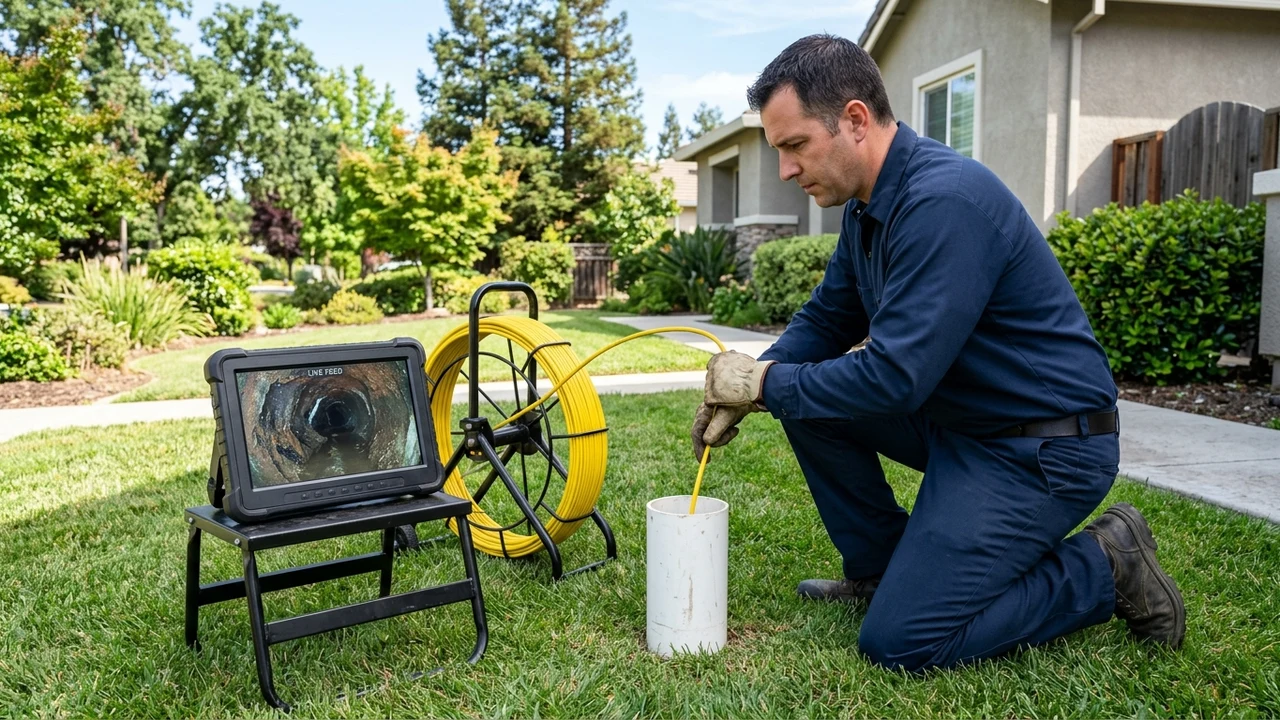
Guessing the cause of recurrent sewer backups leads to wasted maintenance budgets and persistent property damage risks. Licensed plumbing professionals utilize self-leveling, fiber-optic color push cameras equipped with high-frequency electromagnetic 512 Hz sondes. By navigating the camera through an accessible exterior cleanout riser, the technician conducts a real-time visual assessment of the entire line from building foundation to the city main tie-in.
During a sewer lateral inspection in Pittsburg, CA, the technician documents exact pipe materials, joint conditions, intrusion severity, and measures the precise depth and subterranean location of any structural defect using an above-ground electronic locator wand. This surgical diagnostic approach eliminates destructive guesswork, allowing property owners to evaluate targeted spot repairs, trenchless CIPP (cured-in-place pipe) lining, or high-pressure hydro-jetting based on empirical evidence.
Long-Term Solutions for East Contra Costa Property Owners
If your residential or commercial property in Pittsburg, Antioch, or surrounding East Contra Costa communities is experiencing recurrent drainage backups, temporary mechanical cabling will not resolve underlying structural deterioration. Modern trenchless plumbing rehabilitation technologies offer durable, warrantied restoration without requiring extensive trenching through manicured landscaping, concrete driveways, or hardscaped patios:
- Targeted Hydro-Jet Scouring: High-velocity water scouring completely strips biological scale, grease rings, and fine root tendrils, restoring original inside pipe capacity.
- Trenchless Cured-In-Place Pipe (CIPP) Lining: An epoxy-saturated felt tube is inverted through an existing cleanout, inflated against the damaged pipe host, and cured into a seamless, joint-free structural pipe that permanently locks out tree root intrusion for fifty or more years.
- Pipe Bursting Lateral Replacement: For collapsed or severely bellied lines, pneumatic or hydraulic bursting heads fracture the old brittle pipe outward into surrounding soil while simultaneously pulling a new, flexible high-density polyethylene (HDPE) lateral into place.
By partnering with a licensed plumbing contractor experienced in local municipal building codes and East Bay regional soil dynamics, property owners can permanently safeguard their homes against devastating raw sewage contamination.
