
For property owners in Pittsburg, California, underground sewer lines are out of sight and frequently out of mind – until gurgling drains, slow drainage, or an emergency sewage backup occurs. Because residential sewer lateral lines lie buried three to eight feet beneath landscaped lawns, concrete patios, and driveways, diagnosing underground pipe failures without direct visual inspection was historically an expensive guessing game involving destructive exploratory digging.
Modern high-definition sewer camera technology has transformed drain and sewer diagnostics. In East Contra Costa County – where historical residences near Old Town Pittsburg feature aging vitrified clay and cast iron pipes, while newer hillside subdivisions contend with expansive adobe clay soil shifts – an inline video inspection provides incontrovertible proof of pipeline integrity. Discovering exactly what a professional sewer camera inspection reveals empowers homeowners to resolve sewer problems before catastrophic subterranean failures occur.
How Inline Fiber-Optic Sewer Camera Technology Works
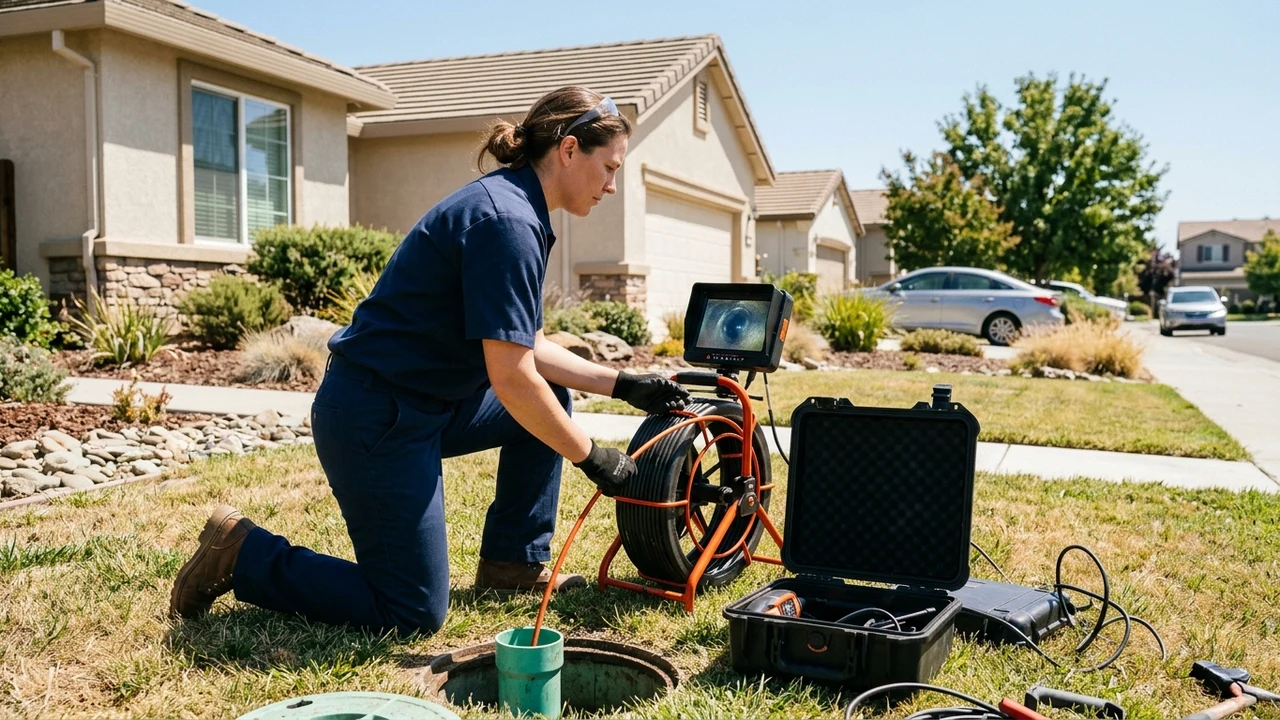
A professional sewer camera inspection involves deploying a specialized, high-resolution waterproof optical probe attached to a rigid, semi-flexible fiberglass push rod. Plumbers insert the camera head into an accessible exterior cleanout fitting or plumbing vent stack, carefully feeding the line down into the primary sewer lateral all the way to the municipal main beneath the street.
Modern diagnostic sewer cameras feature self-leveling heads that ensure the video display remains oriented right-side up, regardless of twists or 90-degree elbows in the line. High-output LED light rings illuminate the dark pipe interior, while digital footage streams in real time to an above-ground monitor. Furthermore, commercial camera heads house an integrated 512 Hz radio transmitter (sonde). As the plumber guides the lens through the sewer lateral, an above-ground digital wand receiver tracks the exact subterranean depth and surface location of structural flaws with sub-inch accuracy.
Major Structural Defects Revealed by Video Inspection
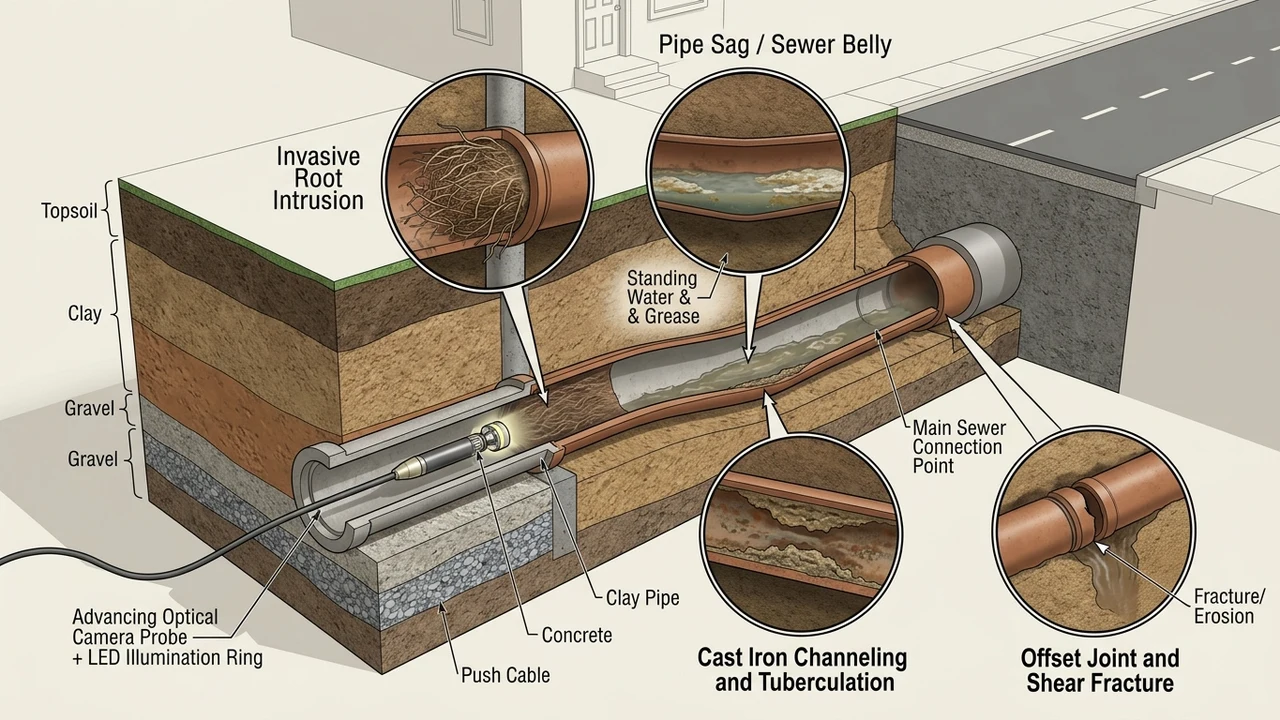
A comprehensive sewer camera inspection provides conclusive visual proof of internal pipe deterioration that mechanical cable snaking cannot detect. The primary structural defects revealed during an inspection include:
- Invasive Tree Root Penetration: Root systems from mature trees seek microscopic moisture plumes radiating from clay pipe seams and fractured cast iron joints. Sewer video cameras capture the precise location, density, and entry points of fibrous root masses before they choke the entire pipe bore.
- Sewer Pipe Bellies and Low Sags: When underlying soil settles or erodes, sewer lateral pipes can lose their critical downward slope (1/4-inch fall per foot), creating an underwater dip or “belly.” The camera captures stagnant standing water, settled toilet paper dams, and trapped solids that snaking blades merely puncture temporarily.
- Radial Fractures, Cracks, and Shear Breaks: Severe seismic ground movement, heavy vehicular traffic over driveways, or unstable soil cause subterranean pipes to crack longitudinally or break radially. The camera reveals whether fractures are minor surface fissures or full structural failures allowing soil ingestion.
- Offset Joints and Pipe Misalignment: In older vitrified clay pipe networks common in Central Pittsburg, ground shifts cause adjacent pipe segments to decouple or become offset. Wastewater rushes against exposed joint lips, snagging debris and creating chronic, repeating clogs.
- Cast Iron Tuberculation, Channeling, and Scale: Decades of caustic chemical use and acidic sewer gases degrade cast iron pipes from the inside out. Cameras reveal severe jagged rust scale (tuberculation) and bottom channeling where the pipe base has rusted through into surrounding soil.
Diagnostic Comparison: Mechanical Snaking vs. Video Camera Inspection
Understanding the diagnostic limitations of mechanical drain cleaning compared to digital video inspection ensures property owners choose the correct engineering solution:
| Evaluation Metric | Mechanical Cable Snaking | HD Sewer Camera Inspection |
|---|---|---|
| Diagnostic Visibility | Zero visual confirmation; operator relies on cable tactile resistance | Full 1080p color video of pipe walls, joints, and pipe conditions |
| Root Cause Identification | Guessed based on debris snagged on rotating cable cutting head | Conclusively identifies exact cause (roots, bellies, fractures, scaling) |
| Subterranean Locating | Cannot determine underground pipe depth or physical yard location | Built-in 512 Hz sonde locates exact pipe position and subterranean depth |
| Structural Integrity Check | Cannot detect thin walls, rust channeling, or offset pipe joints | Exposes structural vulnerabilities, pipe collapse risk, and pipe material |
| Long-Term Value | Temporary symptom relief; clogs often return within weeks | Permanent diagnostic documentation for repair planning and warranty claims |
When Should Homeowners Order a Sewer Camera Inspection in Pittsburg, CA?
While an emergency sewer backup clearly warrants video diagnostics, routine inspections offer significant preventative financial protection under several common circumstances:
- Pre-Purchase Real Estate Due Diligence: Standard home inspections do not cover subterranean sewer lines. Ordering a specialized sewer lateral inspection before closing prevents prospective homebuyers in Contra Costa County from inheriting thousands of dollars in surprise sewer replacement expenses.
- Chronic Recurring Drain Clogs: If you find yourself scheduling drain cleaning or hydro jetting service every few months for recurring toilet or shower backups, an underlying structural defect is present in the mainline that requires camera evaluation.
- Lush, Sunken Patches in the Yard: Sewage leaking from fractured lateral pipes fertilizes lawn grass and erodes surrounding soil. If you spot localized wet depressions, unusually lush green lawn patches, or sewer gas odors outdoors, a cracked pipe is leaking underground.
- Homes Older Than 30 Years: Pittsburg properties constructed prior to the late 1980s often rely on original vitrified clay or cast iron laterals approaching the end of their functional design lifespan. A proactive camera survey identifies thinning walls before sudden collapses occur.
Local Soil Factors Impacting Pittsburg, CA Sewer Laterals
East Contra Costa County’s geological environment places unique strains on underground wastewater infrastructure:
- Expansive Adobe Clay Soils: Soils throughout Pittsburg, Antioch, and Oakley feature high montmorillonite clay content that swells dramatically during wet winter storms and shrinks during arid summer heat. This cyclical volume change exerts tremendous shear stress on buried sewer joints.
- Mature Root Systems: High local water tables along Suisun Bay encourage fast-growing eucalyptus, oak, and willow tree root networks to aggressively seek moisture along sewer line joints.
- Municipal Sewer Lateral Ordinances: Property owners in Pittsburg are legally responsible for maintenance, repair, and environmental compliance of the private lateral from the house foundation to the municipal main connection under the public street. Video inspection footage provides official documentation required for city trenchless excavation permitting.
Actionable Repair Pathways Based on Camera Findings
Once high-definition video inspection pinpoints the exact location and severity of the sewer line condition, licensed plumbing specialists select the least invasive, most cost-effective remediation pathway:
- Commercial Hydro Jetting: If the lateral pipe structure is sound but coated with thick grease, scale, or soft root intrusion, high-pressure water blasting at 4,000 PSI scours the pipe walls back to original full bore flow.
- Trenchless Pipe Bursting: If the camera reveals severe root infestation, fractured cast iron, or extensive offset joints in a stable grade, trenchless pipe bursting pulls a continuous High-Density Polyethylene (HDPE) line through the damaged pipe without destroying lawns or driveways.
- Cured-In-Place Pipe (CIPP) Lining: When structural cracks exist but pipe diameter is preserved, an epoxy-saturated resin liner is inverted into the host pipe and cured, creating a seamless, joint-free structural pipe inside the old pipe.
- Targeted Spot Repair: If damage is isolated to a single localized pipe fracture or root breach while the remaining lateral is pristine, plumbers dig a small, precise excavation pit directly above the sonde location to replace only that damaged section.
Frequently Asked Questions
Can a sewer camera see through standing murky water in a backed-up pipe?
A sewer camera lens cannot see clearly through dense, murky blackwater standing in a completely flooded pipe. In such cases, the plumbing technician first clears the standing water using mechanical snaking or light hydro jetting, allowing murky sewage to drain before running the camera to inspect clean pipe walls.
How long does a professional sewer camera inspection take?
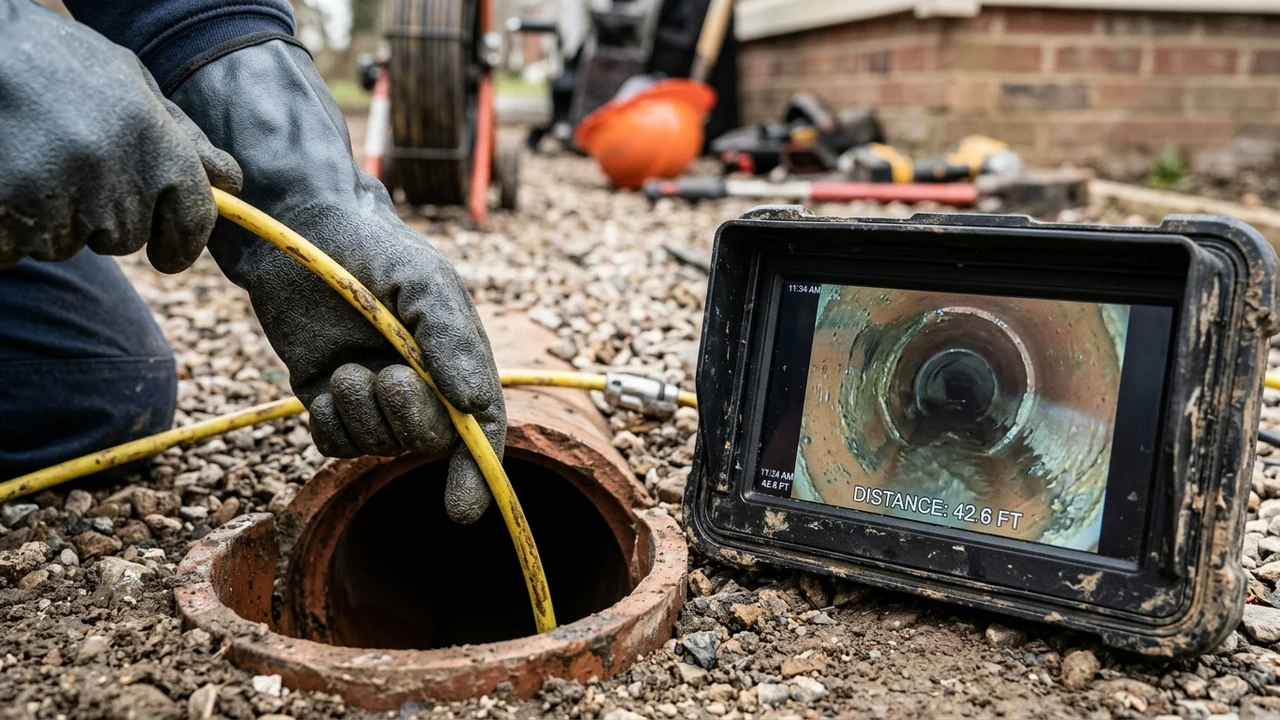
A standard residential sewer camera inspection typically takes between 45 and 90 minutes. This includes accessing the cleanout, feeding the camera along the entire lateral length to the municipal main, mapping key underground locations with the radio locator, and reviewing the recorded video footage with the homeowner.
Does a sewer camera inspection damage pipes?
No. A sewer camera is completely non-invasive and non-destructive. The camera head features rounded, polished guides that glide smoothly along the interior pipe wall without applying mechanical cutting pressure or impacting delicate pipe materials.
Do I receive a copy of the sewer inspection video recording?
Yes. Professional plumbers provide property owners with a complete digital video recording (often on USB drive or secure cloud link), accompanied by a formal written diagnostic inspection report detailing pipe condition, distance measurements, and recommended repair solutions.
