
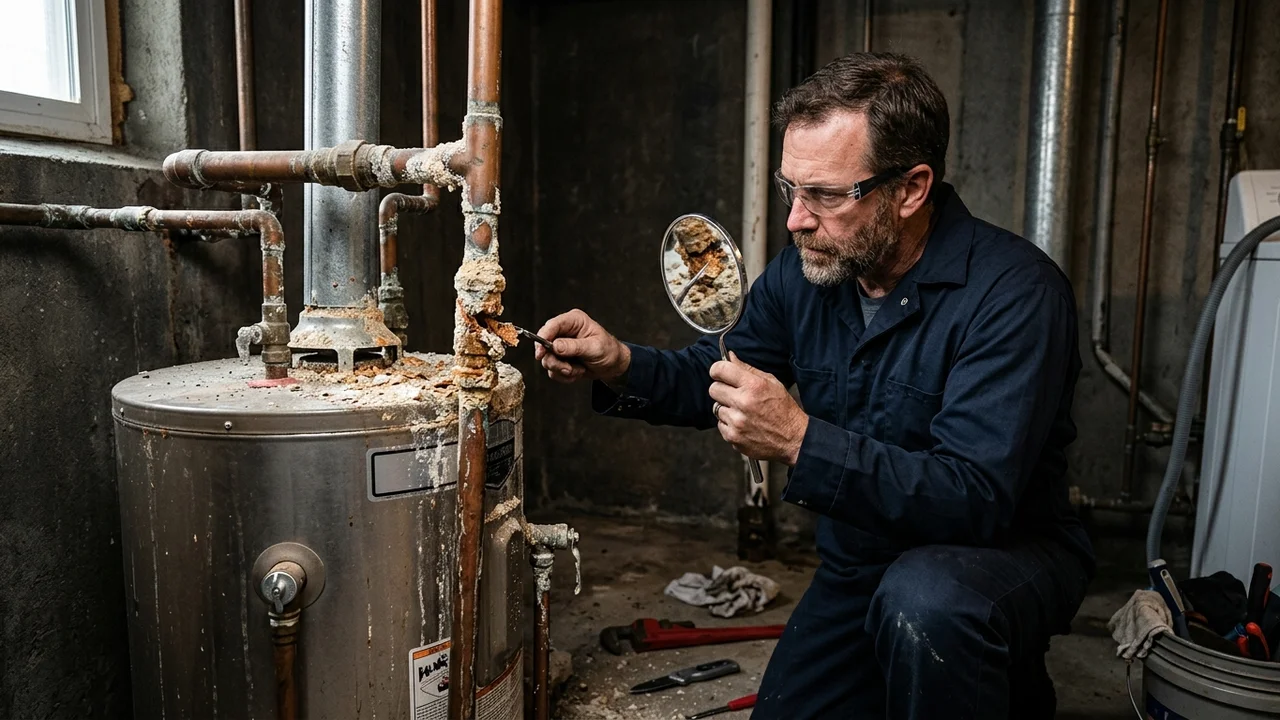
Your pipes might be clogging right now, and you can’t even see it. Most homes in the U.S. get hard water, plain water carrying tiny bits of dissolved rock. It looks clean in the glass. But inside your walls, it leaves a chalky crust on everything it touches, from your kitchen faucets to your water heater. Let me show you what is really going on behind those walls, and how to stop the slow damage before it costs you a fortune.
What Is Hard Water, Really?
Hard water is water that carries a lot of minerals, mostly calcium and magnesium. Think of these as microscopic bits of rock. Rain soaks through limestone and chalk in the ground, picks up these bits, and carries them into your home. You can’t taste much difference. But your plumbing sure can feel it over time.
When this water heats up or sits still, those minerals come out and stick to surfaces. That leftover crust is called scale, or limescale. It’s the white, chalky stuff you see around a faucet spout or on a showerhead. In our shop, about 8 out of 10 homes we test have some level of hardness, so if you have it, you are far from alone.
Here’s the good news first. Hard water is not dirty water, and it will not hurt you to drink it. The trouble is purely mechanical. Those little mineral deposits pile up inside pipes, fixtures, and appliances, and that slow buildup is what causes the problems we will cover below.
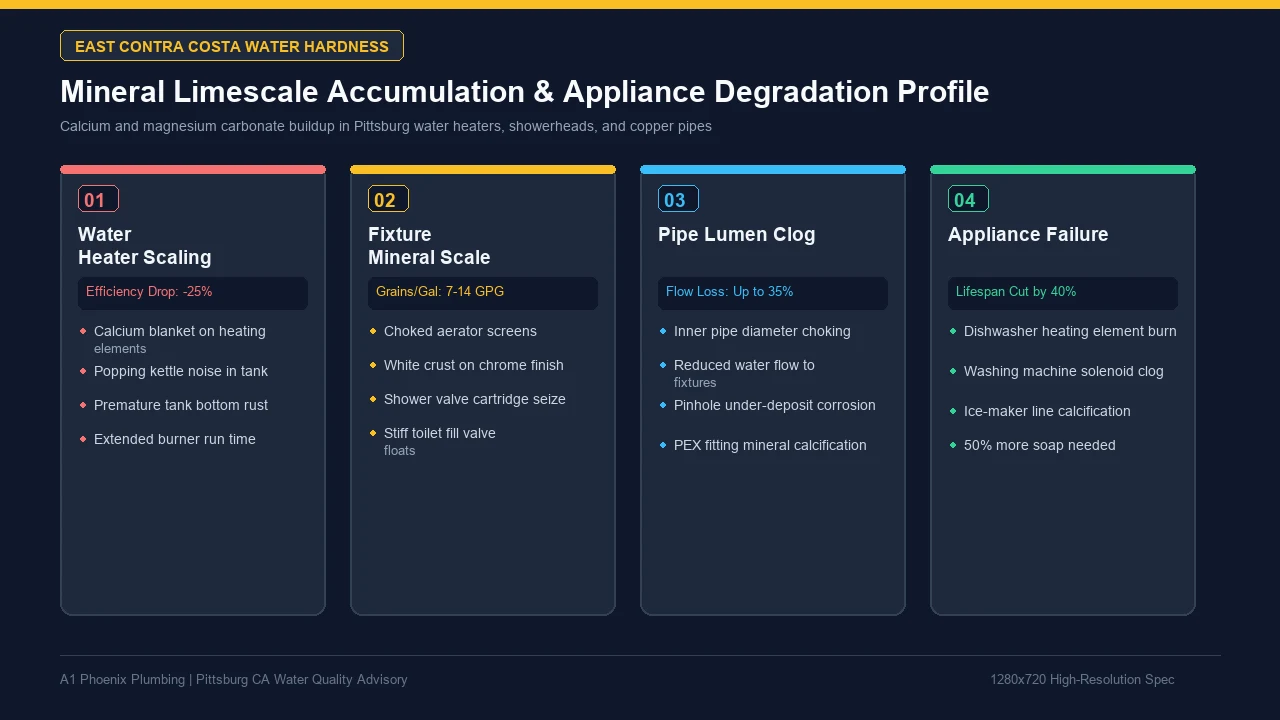
- Calcium and magnesium, the two main hardness minerals
- Scale or limescale, the crust these minerals leave behind
- Deposits, hardened mineral spots on metal, glass, and rubber parts
How Hard Water Slowly Damages Your Pipes
I’ve opened up hundreds of clogged pipes over the years, and the story is almost always the same: a fat ring of white scale choking the flow down to a trickle. It builds slow, so nobody notices until the pressure drops. By then, the damage is already deep.
Here is how it happens. As water moves through your pipes day after day, thin layers of mineral deposits cling to the walls. Each layer traps the next. Over the years, the open space inside the pipe shrinks, like plaque in an artery. In older metal lines, we often find that buildup cuts the usable width by half or more.
Smaller pipe openings mean weaker flow. That’s why your shower feels weak or your sink takes forever to fill. The reduced pressure is a classic sign of a hard water problem. When the tap struggles even though the city supply is fine, scale is usually the reason.
There’s a second problem too: corrosion. Corrosion is when metal slowly rusts and eats away from the inside. Hard water speeds this up in some setups, and in old homes it can even disturb lead or copper in the plumbing. That mix of scale plus corrosion is what wears a system out early. If your pressure keeps dropping and you can’t find the reason, our team can run a quick hardness test and check your pipes for scale.
What Hard Water Does to Your Faucets and Fixtures
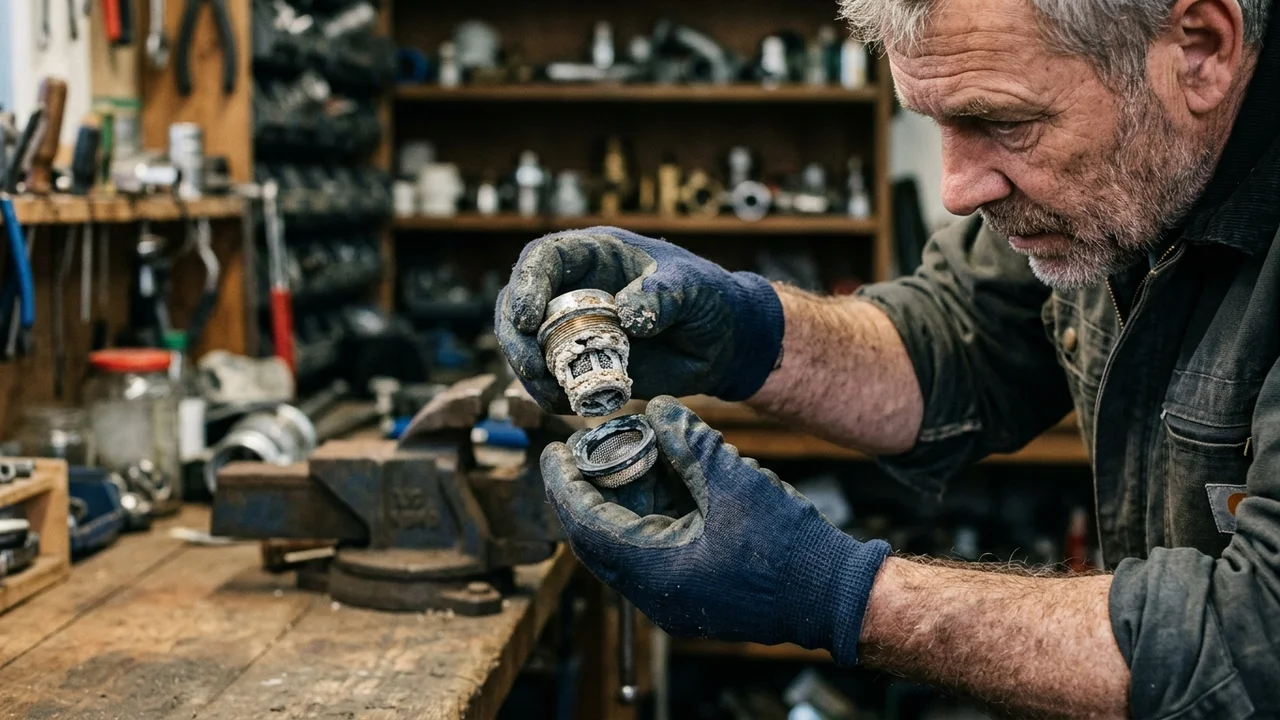
Your faucets take the first hit, because water sits and dries right at the tip. That’s where you see those crusty white rings. Peek inside a faucet and you’ll find the aerator, the little screen that mixes air into the stream. Hard water clogs it fast, sometimes in just a few months.
Showerheads suffer the same fate. Each tiny hole gets blocked with scale, so the spray goes sideways or splits into weird jets. In our experience, roughly 7 out of 10 weak showerheads we open are simply packed with mineral deposits, not broken at all. A good soak in vinegar often brings them right back.
Glass and chrome show the damage too. Those stubborn spots on shower doors, the cloudy film on your drinking glasses, the dull finish on the tap, that’s all hardness. It’s not that your cleaning is bad. The minerals dry onto the surface and stay put.
- Faucets, crusty spouts and clogged aerators
- Showerheads, blocked holes and crooked spray
- Toilets, a ring of scale where the water line sits
- Glass and tile, cloudy spots that keep coming back
Hard Water and Your Water-Using Appliances
In our field work, the appliances that heat water are the ones that fail first and cost the most. Heat is what pulls minerals out of the water fastest, so anything with a heating element becomes a scale magnet. Your water heater is ground zero for this whole mess.
Inside a water heater tank, scale settles on the bottom and coats the heating parts. This layer acts like a blanket. The heater has to work harder and longer to warm your water, which burns more energy. On the units we pull for service, we often scrape out a thick crust of sediment that should not be there. That extra load quietly raises your bills every month.
Dishwashers and washing machines feel it next. Scale coats the spray arms, valves, and hoses, so cleaning performance drops. Your dishes come out spotty. Your clothes feel stiff. Coffee makers and ice makers gum up too, since they heat or hold water for long stretches.
The pattern is clear across every appliance: hard water lowers efficiency, shortens lifespan, and drives up your maintenance work. The heat-plus-mineral combo is simply rough on machines. Softer water, or regular descaling, keeps these systems running the way the maker intended.
Warning Signs Your Home Has a Hard Water Problem
You don’t need a lab to spot hard water. Your home drops hints every day. Once you know the signs, you’ll see them everywhere. Most homeowners we talk to already had a hunch before they ever called us.
Look for these common clues around the house:
- White, chalky crust on faucets, showerheads, and kettles
- Spots and cloudy film on glasses and shower doors
- Soap that won’t lather well, and stiff, dull laundry
- Reduced water pressure that gets worse over time
- Dry, itchy skin and flat-feeling hair after a shower
- Higher energy bills with no clear reason
- A running toilet or a water heater that pops and rumbles
If you check off three or more of these, hardness is very likely the cause. Any single sign can have another explanation. But when they show up together, all throughout the home, the pattern points straight at your water quality.
The Real Cost: Energy Bills, Repairs, and Shorter Lifespans
I’ve handled cases where a family replaced a “broken” water heater twice in six years, never knowing hard water was the real culprit. The damage is not just annoying spots. It’s real money, lost in higher energy use and early appliance death. The numbers back this up.
A report from the Pacific Northwest National Laboratory (PNNL), a U.S. Department of Energy lab, found that scale buildup dragged gas storage water heater efficiency down from 70.4% to 67.4% in about two years of hard-water use. In extreme cases, they note efficiency can fall by up to 10%, and scale can cut an appliance’s working life by 25% to 40%. You can read the full PNNL water-heating report here.
The same research points out that a thin 0.06-inch layer of scale on a heat exchanger can drop its efficiency by about 11% on average. Scale that thin builds up in only a few years when water is hard and hot. So a heater that should last a decade can start wasting energy and money long before it dies.
Here is a simple look at what the research shows about scale and your water heater:
| Water heater problem | What the research shows |
|---|---|
| Lower efficiency on hard water | Dropped from 70.4% to 67.4% in about 2 years |
| Heavy scale buildup | Efficiency can fall by up to 10% |
| Shorter working life | Scale can cut life by 25% to 40% |
| Corrosion from aggressive water | Can cut equipment life by more than half |
Add it all up and hard water quietly taxes your whole household. You pay more to heat water, you replace machines sooner, and you spend more on repairs. That’s why treating the water often pays for itself.
How to Test the Hardness of Your Water
Before you fix anything, find out how hard your water really is. Testing is cheap and quick. You have three easy paths, and I’ll walk you through each. Knowing your number helps you pick the right treatment instead of guessing.
According to the U.S. Geological Survey (USGS), hardness is measured as calcium carbonate in milligrams per liter (mg/L). Water below 60 mg/L is soft, and anything above 180 mg/L is very hard. The USGS also notes the EPA does not regulate hardness, because it’s a nuisance issue, not a health one, which is why fixing it falls on you, the homeowner.
Here’s the full scale, with what you’ll likely notice at each level:
| Water type | Hardness (mg/L as calcium carbonate) | Grains per gallon | What you may notice |
|---|---|---|---|
| Soft | 0 – 60 | 0 – 3.5 | Clean glasses, easy suds |
| Moderately hard | 61 – 120 | 3.5 – 7.0 | A few spots, light film |
| Hard | 121 – 180 | 7.0 – 10.5 | White crust, dry skin |
| Very hard | Over 180 | 10.5+ | Heavy scale, fast clogs |
To find your own number, you have three simple options. Each one works fine, so pick what suits you:
- Test strips: Cheap kits from any hardware store. Dip, wait, and match the color. Quick and good enough for most homeowners.
- Your city report: Public water systems mail a yearly quality report. It often lists hardness right on the page.
- A lab test: The most exact choice, and smart if you have a private well. You mail a sample and get a full readout.
How to Prevent and Fix Hard Water Damage
I’ve seen this pattern many times: people keep buying new fixtures instead of treating the water, then wonder why the crust comes back. The real fix works at the source. Stop the minerals before they spread, and your whole system breathes easier.
The most complete fix is a water softener. A softener swaps the calcium and magnesium for a little sodium, so the hardness never reaches your pipes. In a study published through the U.S. National Library of Medicine (PMC), researchers found a cation-exchange water softener cut scale buildup in a test plumbing loop by more than 99% (study here). That’s a near-total stop.
You have a few real choices, depending on your budget and how hard your water is:
- Salt-based softener: Removes hardness minerals fully. Best for very hard water and whole-home protection.
- Salt-free conditioner: Changes how minerals behave so they stick less. Lower upkeep, but a lighter touch than true softening.
- Descaling: Cleans out scale that already formed in a heater, faucet, or pipe. Great as a fix, not as prevention.
- Point-of-use filters: Handy for one tap or an ice maker, but they don’t protect the whole house.
For scale that has already built up, descaling is your tool. You flush the water heater, soak the aerators, and run a mild acid or vinegar through the parts. It clears the crust and restores flow. If you’re not sure which path fits your home, we can help you compare a softener and a descaling plan side by side.
Water Softener vs. Descaling: What’s the Difference?
People mix these two up all the time, so let’s make it plain. A softener prevents. Descaling repairs. One stops new buildup from forming; the other cleans out the mess you already have. Many homes end up using both, soften the water, then descale once to reset.
Think of it like your teeth. Brushing every day keeps plaque from forming. A dentist scraping off old tartar is the deep clean you get now and then. A softener is your daily brushing. Descaling is the scraping.
Here’s a side-by-side to make the choice clear:
| Feature | Water softener | Descaling |
|---|---|---|
| What it does | Removes minerals before they enter your home | Cleans scale that already built up |
| Best for | Stopping new buildup everywhere | Fixing a heater, faucet, or pipe now |
| How often | Runs all the time; add salt now and then | As needed, often once or twice a year |
| Protects | Your whole plumbing system | Mostly the part you clean |
| Effort | Set up once, low upkeep | Hands-on each time |
So which do you need? If your water tests hard and you want long-term peace, start with a softener. If a single appliance is already crusty and slow, descale that part first. Got both problems? Do both, and you’ll notice the difference fast.
Easy Maintenance Habits to Protect Your Plumbing
I’ve found that a few small habits do more for your plumbing than any single big purchase. Regular care keeps scale from ever getting a foothold. None of this is hard, and most of it costs almost nothing. Ten minutes here and there saves you real repair bills later.
Build these simple maintenance steps into your year, and your fixtures and appliances will thank you:
- Flush your water heater once a year to clear sediment from the bottom of the tank.
- Soak faucet aerators and showerheads in white vinegar every few months to melt away deposits.
- Wipe down glass, tile, and chrome soon after use so minerals don’t dry and harden.
- Check your water pressure now and then; a slow drop often means hidden scale.
- Run a descaling cycle through your dishwasher and coffee maker as the maker suggests.
Doing these keeps your household running smooth and protects the money you spent on good appliances. Small, steady care beats one big emergency repair every time. If a job feels over your head, like flushing a stubborn heater, our team is glad to help you handle it safely.
Honestly, the biggest mistake I see is waiting. People let scale win for years, then face a huge bill all at once. A little effort each season keeps that from happening.
Final Thoughts
Hard water is sneaky. It hides inside your pipes and machines, quietly building scale, raising energy bills, and cutting the lifespan of things you paid good money for. The effects creep up slow, but they add up fast. The tools to fight back are simple: test your water, treat it at the source, and keep up light maintenance.
You don’t have to live with weak showers and crusty faucets. Learn your hardness number, pick between a softener and descaling, and protect your home for the long haul. Small steps today save you big headaches and cash tomorrow.
Have you spotted any of these signs in your own house? I’d love to hear which fix worked best for you, every home is a little different, and the real-world stories always teach me something new.
Frequently Asked Questions
Is hard water bad for my health?
No, hard water is safe to drink. The calcium and magnesium in it are just minerals, and some people even count them as a small plus in their diet. Health agencies treat hardness as a nuisance, not a danger. The real harm is to your plumbing, fixtures, and appliances, not to you.
Can hard water really clog my pipes?
Yes, and it does it slowly. Over time, mineral deposits stick to the inside of your pipes and shrink the open space. That leads to reduced flow and weaker pressure. Older metal pipes clog faster than newer plastic ones, but no system is fully safe from scale.
How do I know if I have hard water?
Watch for the signs first: white crust on taps, spotty glasses, weak lather, and stiff laundry. Then confirm it with a cheap test strip, your city’s water report, or a lab test. If you have a private well, a lab test is the smart, exact choice for real understanding of your water quality.
Does a water softener fix everything?
A softener stops nearly all new buildup, which protects your whole home going forward. But it won’t remove scale that already formed inside your heater or faucets. For that, you still need to descale once. Pair the two, and you both clean the past mess and prevent the next one.
Should I repair or replace an appliance ruined by scale?
It depends on the damage. Light scale on a heater or dishwasher usually just needs a good flush or descaling, cheap and quick. But if you see rust, leaks, or deep corrosion, replacing the appliance is often the safer call. If you’re unsure, we can take a look together and help you weigh the cost of a repair against a new unit.
