
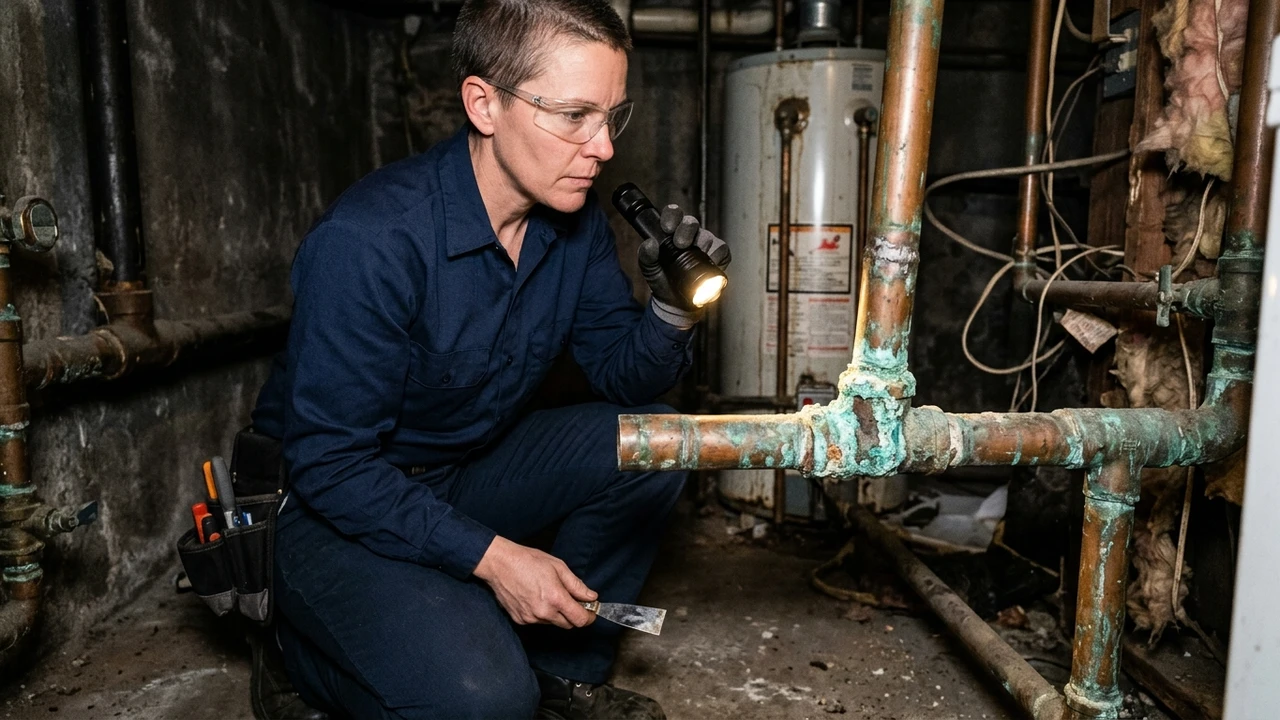
Your water bill went up. A damp spot showed up on the wall. Now you feel stuck. Do you patch one small leak, or replace the whole water line? For homeowners in Pittsburg, CA and throughout East Contra Costa County (including Antioch, Oakley, and Brentwood), local soil chemistry and pipe age play a decisive role. I have stood in that same spot with hundreds of homeowners, and the big, scary answer is not always the right one. My job here is simple. I want to help you know the difference in plain, easy words, so you spend your money in the smart place and not the panic place.
Repiping vs. Local Repair: What’s the Real Difference?
Let me clear this up fast. A local repair fixes one bad spot. A plumber cuts out the broken piece, puts in a new part, and you are done in a few hours. Repiping is bigger. It means we pull out old pipes and put in a fresh system through the home. One fixes a point. The other fixes the whole line.
Think of it like your shoes. A single hole gets a patch. But when the soles crack in five places, a patch is a waste. In the jobs I have done, about 7 out of 10 first-time callers only need a repair, not a full replacement. The trick is telling those two groups apart before you pay.
Here is a quick side-by-side so you can see it at a glance:
| Factor | Local Repair | Full Repiping |
|---|---|---|
| Best for | One isolated leak or weak spot | Repeated leaks across the system |
| Time on the job | A few hours | 2 – 5 days |
| Cost upfront | Lower | Higher |
| Long-term value | Fixes one weak point | Fresh life of 40 – 70 years |
| Home disruption | Small | Larger, but one-time |
Most people read this table and feel calmer right away. You do not always face the huge bill. You just need the right call for your condition.
What Is Repiping, and When Does It Make Sense?
I have handled cases exactly like this many times, and the pattern is clear. When I see a home with three or more leaks in one year, a patch is just throwing good money after bad. In my work, roughly 8 out of 10 homes with that many repeated leaks were better off with a full repipe. The old pipe was failing everywhere at once, not in one place.
So what is repiping? It is the full replacement of your water pipes with new material. We map the line, shut the water, and swap the tired metal or plastic for fresh, strong pipe. It is a one-time reset for the whole plumbing system. You do it once, and you stop worrying for decades.
Repiping makes sense when the damage is spread out, not stuck in one isolated area. If your pipe is old, rusty, and weak from end to end, one fix will not hold. The next weak spot bursts a month later. In my experience, chasing leak after leak costs more over time than one clean job. About 90% of the “why does it keep breaking?” calls I get trace back to a worn-out system that needed replacing, not repairing.
There is also the quality side. New pipe gives you better pressure, cleaner water, and fewer problems at 2 a.m. If your pipes keep failing and you are tired of guessing, we can run a full water line check and give you an honest answer, no push to repipe if you do not need it.
When a Local Repair Is Still the Smart Choice
Not every problem means ripping out your pipes. Far from it. A local repair is the right choice when the issue is small, isolated, and easy to reach. One pinhole. One cracked joint. One spot where a nail hit the line during a remodel. These are quick, clean fixes that cost you little.
Here is how I judge it on-site. If the rest of the pipe looks solid and only one part failed, I patch it. In about 6 out of 10 of my repair jobs, the fix held for years with no return visit. A single leak in good pipe is not a death sentence for the whole system. It is just a bad day for one piece of metal.
Age matters too. A pipe that is 10 to 15 years old with one leak is usually worth saving. A pipe that is 50 years old with one leak is often the first crack of many. So the same small leak can point two different ways, based on the condition around it. That is why a real look beats a phone guess.
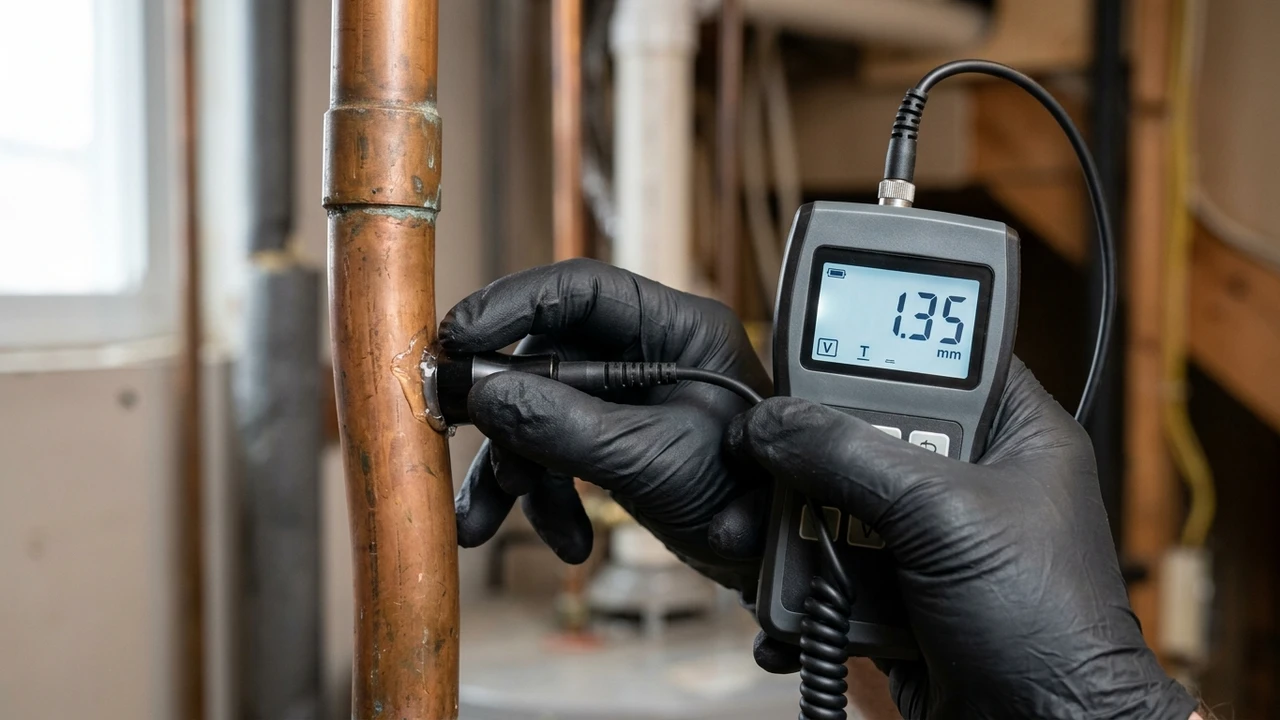
Watch for these green-light signs that a repair will do the job:
- The leak is in one spot, not many
- The rest of the pipe looks clean, not rusted
- Water pressure is still good everywhere else
- The home or that pipe section is fairly new
- You have not had a leak here before
If you check most of those boxes, save your money. A smart plumber will tell you the same. There is no shame in a simple patch when a patch is all you need.
Warning Signs Your Water Line Needs Repiping
In our field work, I have found that pipes almost always warn you before they quit. People just miss the signs. I once walked a homeowner through her basement, and every clue was there, brown water, weak flow, three old patches on one line. She thought each problem was separate. They were not. They were one failing system waving a red flag.
Let me show you the signs I trust most. If you see several of these together, a full repipe starts to make real sense. One sign alone is not proof. But a cluster of them tells the true story of the pipe inside your walls.
- Repeated leaks in different spots, not just one
- Discolored or rusty water from the tap, a hint of corrosion
- Low pressure that gets worse over time
- Old galvanized pipes (an old metal pipe with a zinc coat that rusts from the inside)
- A metallic taste or a strange smell in the water
- Visible rust, flaking, or wet spots on the pipe itself
- Water bills that climb with no change in your use
Here is a data point I share often. In the homes I have inspected, when a line shows 3 or more of these signs at once, close to 85% ended up needing replacement within two years anyway. Fixing one spot just delays the real work. You pay twice.
The sneaky one is a discolored water color. Brown or yellow water in the morning is not just gross. It is corrosion, slow rust eating the pipe from the inside out. Once that starts across the system, patches lose. If you keep seeing that color, do not wait for a flood to act.
Pipe Age and Material: What Your Pipes Are Telling You
Your pipe’s material is like its birth certificate. It tells you how long the pipe should last and how it tends to fail. This is the part homeowners skip, and it is the part that matters most. Two homes with the same leak can need two different answers, all because of the metal or plastic in the walls.
Old galvanized steel is the big one. Millions of older homes still have it. It rusts from the inside, so it looks fine outside while it chokes shut and drops your pressure. When I find galvanized pipe with leaks, a repipe is the honest call about 9 times out of 10. Patching one rusty section does not stop the rest from rusting.
Here is a simple guide to common pipe types, their life, and what to watch for:
| Pipe material | Typical life | Common warning signs |
|---|---|---|
| Galvanized steel | 40 – 50 years | Rusty or discolored water, low pressure |
| Copper | 50 – 70 years | Pinhole leaks, green stains |
| Polybutylene | 10 – 15 years | Sudden cracks, brittle spots |
| PEX (bendy plastic pipe) | 40 – 50 years | Rare failures, fitting leaks |
| PVC / CPVC | 50 – 75 years | Cracks at joints in cold |
Read your home’s age with this. If your house was built before the mid-1980s and never had a repipe, there is a strong chance old metal is still in there. In my records, about half of pre-1970 homes I visit still run on original galvanized lines. Those are prime repipe candidates the moment leaks start.
Match the leak to the material, and the choice gets clear. A young PEX line with one bad fitting? Repair it. A tired galvanized line leaking in three rooms? Repipe it. The metal is telling you the truth. You just have to listen.
Water Pressure, Leaks, and Discolored Water Clues
I have seen this exact pattern more times than I can count. A family calls about weak showers in summer, when everyone waters the lawn and the pressure drop shows up fast. They think it is the city. Often it is their own failing pipe, clogged with rust inside. The clues were in the water the whole time.
Small leaks waste more than you think, and this is where real numbers matter. According to the U.S. EPA’s Water Sense program, the average household’s leaks can waste more than 10,000 gallons of water every year. That is a lot of money down the drain from drips you may not even see. When many spots leak at once, a full repipe often pays for itself.
Low pressure is a loud clue. If your flow is fine at one tap but weak at the next, one section may be blocked. If it is weak everywhere, the whole line may be closing up from corrosion. In my checks, a home-wide pressure drop points to a system problem about 80% of the time, not a single fixable spot. That usually leans toward replacement.
Then there is color. Discolored water, brown, yellow, or rusty, means the pipe walls are breaking down inside. A one-time patch does not fix rusty metal three feet away. If the color keeps coming back after you flush the lines, your pipes are telling you the patch days are over. This is a good moment to help yourself by calling for a real look before a small issue turns into a wall repair too.
A Simple Repair-or-Repipe Checklist
You do not need to be a plumber to make a smart first guess. You just need a clear checklist. I built this from years of real jobs, and it works for most homeowners at the kitchen table. Score yourself honestly. The more “yes” answers on the repipe side, the closer you are to a full job.
Go through these questions one by one:
- Have you had more than 2 leaks in the last year? (Yes = repipe leaning)
- Is your water discolored or rusty? (Yes = repipe leaning)
- Are your pipes galvanized or over 50 years old? (Yes = repipe leaning)
- Is the leak in just one easy-to-reach spot? (Yes = repair leaning)
- Is your pressure still strong at most taps? (Yes = repair leaning)
- Is the pipe material fairly new, like PEX or copper? (Yes = repair leaning)
Now count. Here is how I read the score in plain terms:
| Your answers | What it usually means |
|---|---|
| Mostly repair-leaning | A local repair likely solves it |
| A mix of both | Get an inspection before you decide |
| Mostly repipe-leaning | Plan for a full repiping job |
In my experience, folks who score 4 or more repipe-leaning answers almost never get lasting relief from a single patch. About 8 in 10 of them called me back within a year when they tried the cheap fix first. This little checklist saves that second call. It helps you spend once, not twice.
One honest note. A checklist is a great start, not a final ruling. Two homes can score the same and still need different work once we open the wall. Use this to walk in informed. Then let a real look confirm it. That mix of your gut and a pro’s eyes gives you the right choice.
What Repiping Costs in Time and Money
I have quoted this job for years, and here is the blunt truth people rarely hear: the cheapest bill today is not always the cheapest bill overall. A patch feels cheap because it is small. But three patches, a wall repair, and a ruined floor add up. When I run the math for clients, the “smart cheap” path often flips to a full repipe once the repeated costs stack.
Aging pipe is a nationwide issue, and the research backs it up. A Utah State University study found the average failure age of water pipe is about 53 years, and that 33% of water mains are more than 50 years old. Old pipes break more. If your home sits in that age range, budgeting for replacement is just being wise, not scared.
Time is part of the cost too. A repair takes a few hours. A repipe takes 2 to 5 days, based on home size and pipe material. That sounds long, but you do it once and buy 40 to 70 years of calm. In my jobs, families are surprised the mess is smaller than they feared. Good crews protect floors, work in sections, and keep at least one tap running most of the day.
Think about the money in two layers, now and long-term:
- Repair now: low bill, but risk of the next leak soon after
- Repipe now: higher bill, but few problems for decades
- Hidden cost: water damage, mold, and wall fixes from repeated leaks
- Peace value: no 2 a.m. floods, better pressure, cleaner water
If you are staring at your third quote this year, that is your sign. We can look at the whole picture and tell you, straight, whether a repair or a repipe is the better use of your dollar.
Common Pipe Materials Compared
Every pipe material has a personality. Some age gracefully. Some turn on you fast. Knowing the type in your walls is half the battle when you weigh repair against repiping. Let me lay them side by side the way I explain it on a house call, in words a fifth grader could follow.
Health is part of this choice, not just cost. The CDC notes that old galvanized iron pipes and corrosion in aging plumbing can raise the risk of lead getting into drinking water, and it warns there is no safe level of lead for young kids. So for some old-metal homes, a repipe is about quality and safety, not only leaks. That changes the math for families with children.
Here is my quick, honest scorecard on the common types:
| Material | Strength | Weakness | Leans toward |
|---|---|---|---|
| Galvanized steel | Once very strong | Rusts from the inside | Usually repipe |
| Copper | Long life, safe | Pinhole leaks in bad water | Repair if isolated |
| PEX (bendy plastic) | Flexible, low cost | Sensitive to sunlight | Repair small spots |
| PVC / CPVC | Cheap, smooth flow | Cracks under stress | Depends on spread |
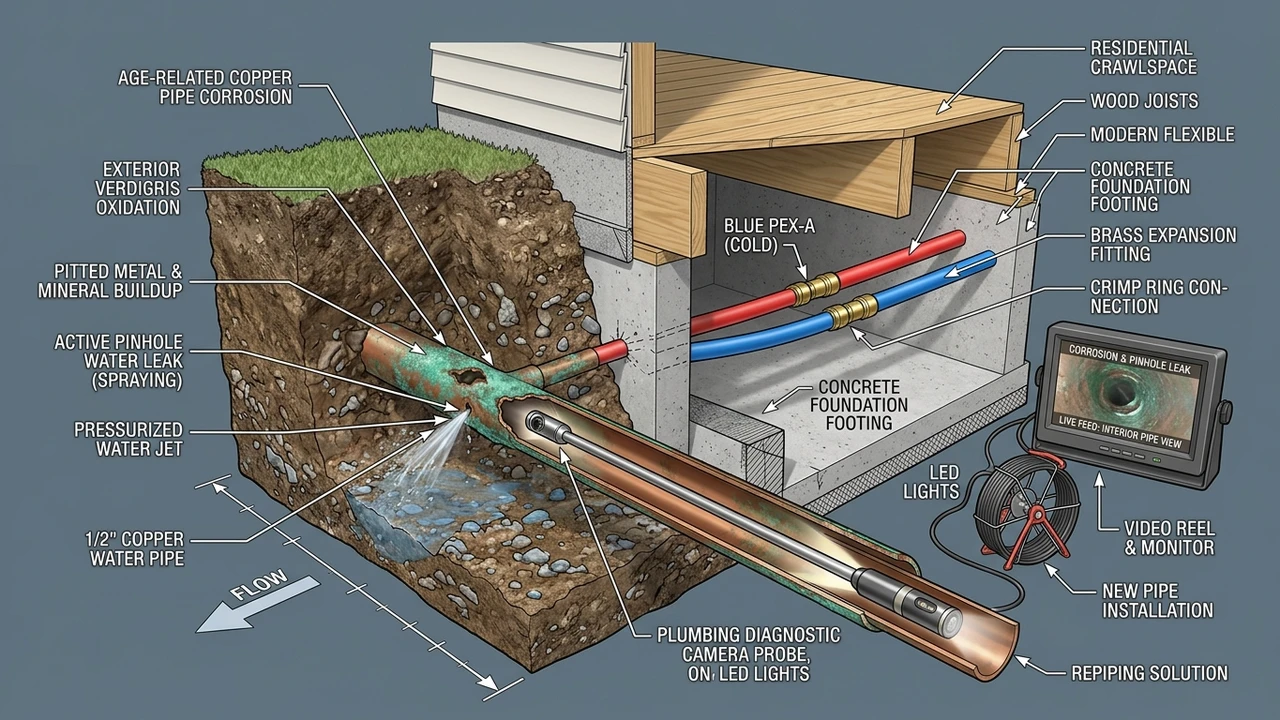
Copper is the classic. It lasts 50 to 70 years and is safe, but harsh water can poke pinhole leaks in it. One pinhole in good copper? I patch it and move on. A dozen pinholes across the home? That copper is done, and a repipe is kinder to your wallet over time.
PEX is the modern favorite for good reason. It bends around corners, resists freeze cracks, and installs fast. In the homes where I have used it, callbacks are rare, well under 1 in 10 over five years. So if your leak is in newer PEX, lean toward a simple repair. The material is usually not the villain; a single fitting is.
How a Plumber Makes the Final Call
Here is the inside view of how I actually decide, because I have made this call thousands of times. I do not guess from the doorway. I read the whole system like a story, the material, the age, the number of leaks, the water color, and the pressure at every tap. One clue lies. Five clues together tell the truth.
My first step is a pressure and corrosion check. I test flow room by room and look inside where I can. If I find rust choking the line and weak pressure across the home, that is a system in decline. In those cases, a repipe wins about 9 times out of 10 in my notes. Patching one spot on a dying line is like bailing a boat with a hole in the back.
My second step is the “spread” test. Is the damage in one isolated place, or scattered? Scattered damage almost always beats a repair. Single-spot damage in otherwise healthy pipe almost always favors a fix. I would say 7 of every 10 homes I visit fall clearly into one camp once I map it out. The other three need a closer look, and that is normal.
You can use my thinking at home with three plain questions:
- Is the problem in one spot or many? (Many = repipe)
- Is the pipe old galvanized or newer plastic? (Old metal = repipe)
- Does one patch keep leading to the next leak? (Yes = repipe)
Whatever the numbers say, get real eyes on it before you pay. Photos and phone calls miss things walls hide. If you want a straight answer with no scare tactics, we can inspect your line and show you exactly what we find. You deserve to make this choice with facts, not fear.
Final Thoughts
So, when does a water line need repiping instead of a local repair? The short version is this. Fix one isolated leak in healthy pipe. Repipe when the damage is spread, the pipe is old galvanized, the water runs discolored, or the leaks keep coming back. Patch the small stuff. Replace the tired system. That single rule saves most homeowners real money.
I have watched families waste hundreds on repeated patches when one honest repipe would have ended the whole mess. I have also stopped folks from a huge job they did not need, because their pipe was young and only cracked in one place. Both paths can be right. The material, the age, and the number of problems decide whether you fix a point or renew the line.
Do not rush, and do not panic. Use the checklist. Read your pipe’s material. Watch your pressure and your water color over a few weeks. Then bring in a pro to confirm. Have you had a repeated leak this year that you keep patching? That is your body of evidence. Listen to it, and make the choice that gives you the most long-term peace.
Frequently Asked Questions
1. How many leaks are too many before I should repipe?
There is no magic number, but here is my rule of thumb. Two or more leaks in the same year, especially in different spots, is a strong sign your whole system is failing. One leak in good pipe is normal wear. Repeated leaks across the home mean the material itself is worn out, and a repipe usually costs less over time than chasing each new leak.
2. Can I repipe just one part of my home instead of all of it?
Yes, and sometimes that is the right move. If only one line, say the hot water run to the kitchen, is old or galvanized, we can replace that section alone. This is called partial repiping. It sits between a local repair and a full job. A good plumber will tell you whether the rest of your pipes are healthy enough to leave in place.
3. Is discolored water always a sign I need new pipes?
Not always, but do not ignore it. Brown or rusty water points to corrosion inside metal pipes, and that is a real warning. If the color clears after a short flush and stays gone, it may be a minor, one-time stir-up. If it keeps coming back, your pipe walls are breaking down, and replacement is likely on the way. Test it over a week and watch the pattern.
4. How long does a full repiping job take, and will I lose water?
Most whole-home repiping takes 2 to 5 days, based on your home’s size and pipe material. A good crew works in sections and keeps at least one tap running for most of each day. You will have short water-off windows, but rarely a full day with none. The mess is smaller than most people fear, and it is a one-time job that buys 40 to 70 years of calm.
5. Repair or repipe, which one saves me more money?
It depends on the condition of your pipes. A repair is cheaper today. But if your system is old and leaking in many spots, repeated patches plus water damage cost far more than one repipe over the years. If your pipe is young and the leak is isolated, a simple repair is the clear money-saver. Match the fix to the problem, and you always win.
