
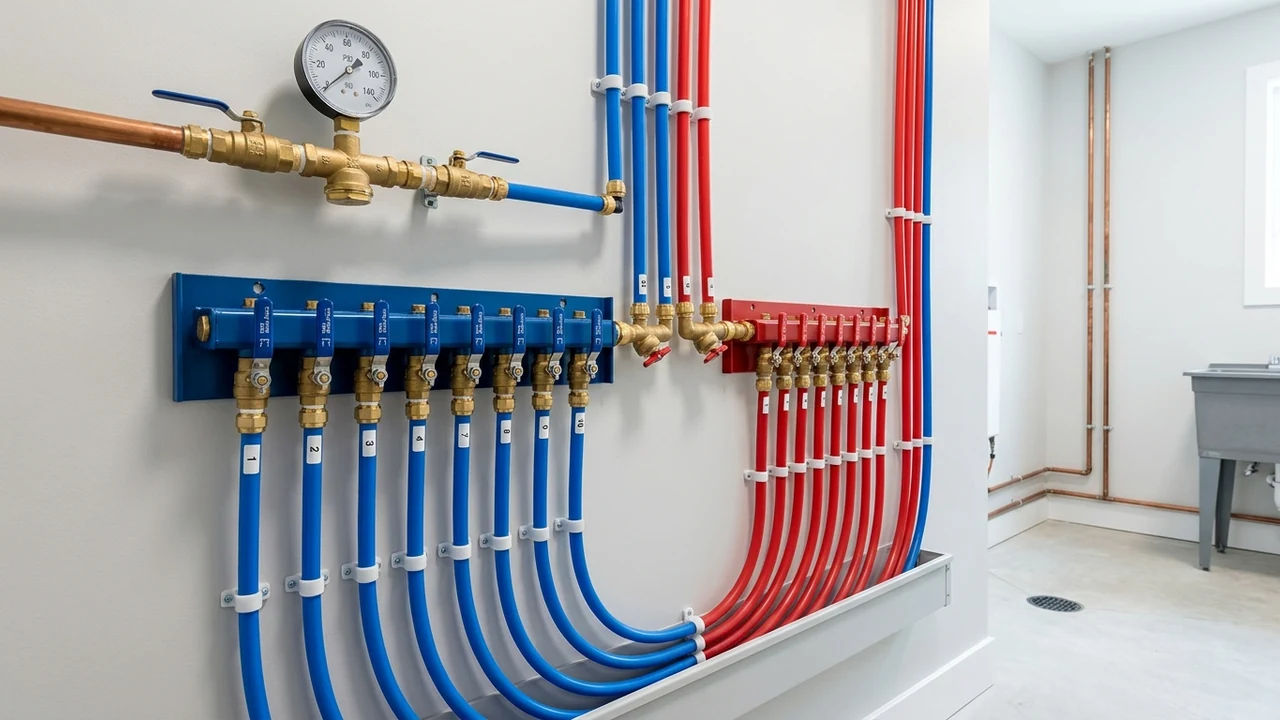
For homeowners across Pittsburg, CA and surrounding East Contra Costa County communities like Antioch, Oakley, and Brentwood, plumbing system failures often present a critical choice: execute a targeted water line rerouting or perform a complete whole-home repiping. With local soil shifting and mineralized municipal water, making the right choice saves thousands in unnecessary slab trenching.
A water line leak can turn a calm morning into a wet mess fast. One day your floor feels warm or damp, and you have no idea why. Now you face a big choice: repipe the whole system or reroute just the bad part. I’ve helped many families make this call, and I’ll keep it simple so you know exactly what fits your home.
What Is Water Line Repiping?
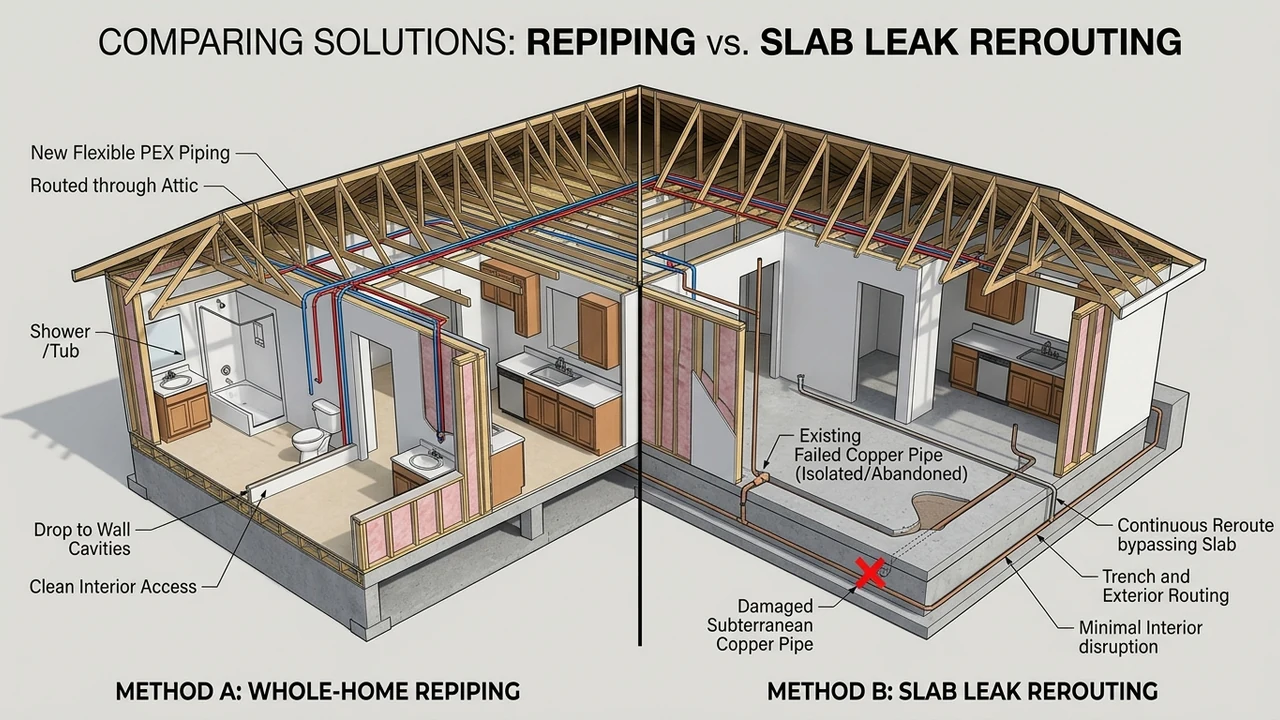
Repiping means we replace all the old water pipes in your home with brand-new ones. Think of it like swapping out the whole set of veins that carry water through your house. We pull out the worn pipes and put in fresh materials like copper or PEX. This is a full system fix, not a small patch. It covers your kitchen, your bathrooms, and every water line hidden inside the walls.
Most homes only need this done once in their lifetime. In our work, we see full repipe jobs last 40 to 50 years when good materials are used. That’s a long time to stop worrying about leaks. A whole-house repipe usually takes a few days to finish. It costs more up front, but it fixes the root problem for good instead of chasing one drip at a time.
What Is Water Line Rerouting?
I’ve handled cases exactly like this before. A single hidden leak under a slab was driving one family crazy, and a smart reroute saved them a huge dig. So what is it? Rerouting means we bypass one damaged section of pipe and run a new line along an easier, more accessible path — through a wall, the attic, or the ceiling. The old broken part stays right where it is and gets capped off. Water simply takes the new road.
This fix works best when the problem is isolated to one spot. In my experience, about 7 out of 10 small leak jobs can be solved with a smart reroute instead of a full tear-out. It’s faster, and it’s much cheaper. Most reroute jobs wrap up in about one day. Best of all, you skip the noise and mess of breaking open concrete.
Repiping vs Rerouting: Key Differences at a Glance
Let me put the two side by side. Sometimes a simple chart makes the choice clear in seconds. Both methods stop leaks, but they work in very different ways. One is a full swap of everything. The other is a small, targeted bypass. Here is how they stack up against each other.
| Feature | Repiping | Rerouting |
|---|---|---|
| What it does | Replaces the entire pipe system | Bypasses one damaged section |
| Best for | Multiple leaks, old or corroded pipes | A single, isolated leak |
| Cost | Higher up front | Lower up front |
| Time | 2–4 days | Often 1 day |
| Disruption | More walls opened | Less digging, less mess |
| Long-term fix | Solves the whole system | Fixes one spot only |
Here’s the quick takeaway. If only one pipe is bad, a reroute is often the smart, low-cost option. If your pipes are old and failing in multiple places, a full repipe is the better long-term choice. In about 8 out of 10 older homes we inspect, age and corrosion turn out to be the real cause. The golden rule is to match the size of the fix to the size of the problem.
Why Water Lines Get Damaged
In my professional experience, most water line failures come down to a few quiet causes. Corrosion is the big one — that’s when metal pipes slowly rust and grow weak from the inside out. High water pressure is another; it stresses the pipe walls day and night without a break. Old age and cheap materials finish the job. Add shifting soil under the foundation, and you’ve got the perfect setup for hidden leaks.
Older homes carry the most risk by far. In the houses we service, pipes over 50 years old fail far more often than newer ones. Galvanized steel and thin old copper are the usual trouble spots. Once one weak point goes, others tend to follow close behind. That pattern is exactly why we always check the whole system, not just the one leak you called about.
Corrosion From the Inside Out
Corrosion eats pipes slowly and silently. Water and minerals react with the metal every single day for years. Little by little, the pipe wall gets thinner and thinner. Then it cracks or springs a tiny pinhole leak you can’t even see. In our repairs, corroded lines are the number one reason a home finally needs full repiping.
Pressure and Shifting Soil
Too much pressure is a silent killer of pipes. We often measure home pressure running above 80 psi, which is higher than most pipes like to handle. That extra force strains the joints and thins the walls over time. Under the slab, moving soil bends and rubs against the pipe too. Both problems speed up the damage and lead straight to hidden leaks.
Warning Signs You Have a Water Line Problem
Your home talks to you before a pipe fully gives out. You just have to know what to listen for. Small clues show up early, and catching them saves a lot of money. I tell every homeowner to keep an eye out for these signs. If you spot two or more together, call a pro fast before it grows.
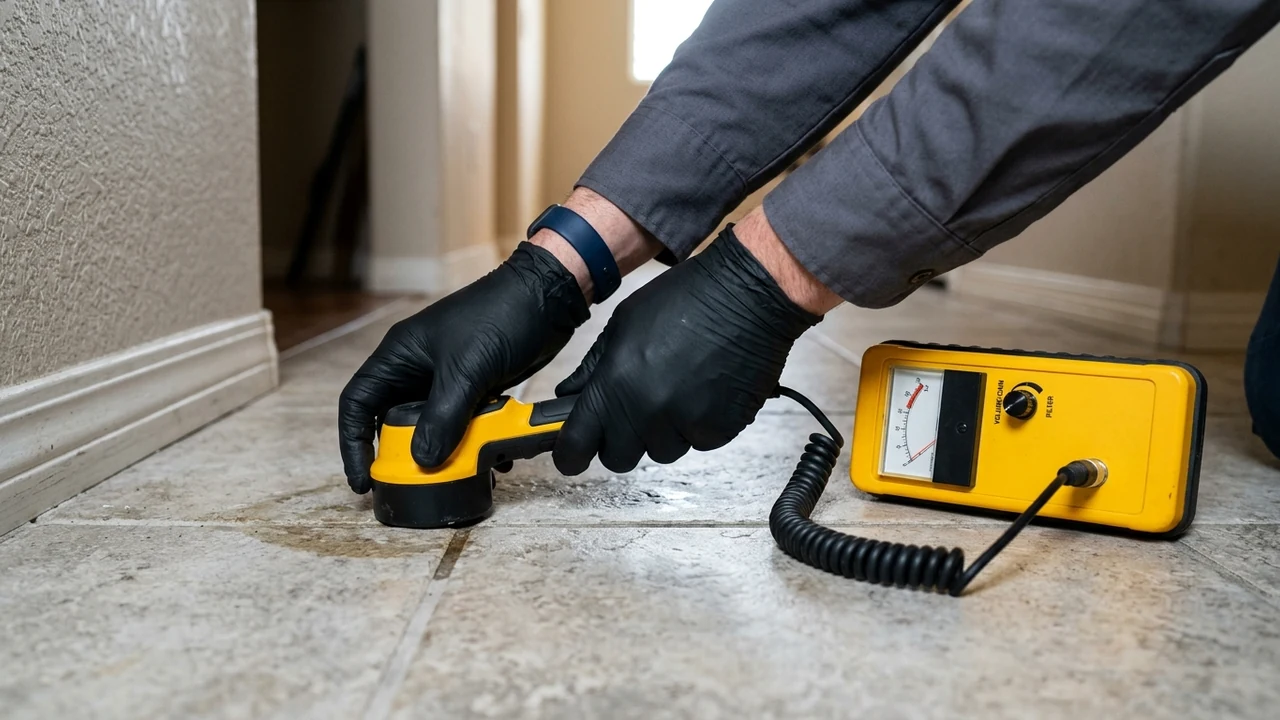
- Warm or wet spots on the floor — a classic sign of a slab leak
- Low water pressure that shows up out of nowhere
- Higher water bills with no change in how much you use
- The sound of running water when every tap is off
- Rusty or cloudy water from corrosion inside the pipes
- Cracks in walls or floors near the foundation
Please don’t wait on these signs. A slow leak can waste a lot of water and quietly harm your foundation month after month. In our service calls, homeowners who act within the first week spend about 30% less on repairs than those who wait for months. Fast action keeps a small reroute from turning into a full repipe. Trust your gut here — if something feels off, it usually is.
When Rerouting Is the Smarter Choice
I’ve seen this pattern many times in my work: one bad spot, lots of good pipe, and a homeowner ready to panic. That’s the perfect case for a reroute. When a leak is isolated to a single section, there’s no reason to replace the whole system. We run a fresh line around the trouble and cap the old part off. It’s clean, quick, and much easier on your wallet.
Rerouting really shines when the rest of your pipes are still in good shape. In our jobs, a single-line reroute often costs around one-third the price of a full repipe. It also avoids breaking your concrete slab wide open. You keep your floors, and you keep your budget. That’s a choice most families feel good about the moment they hear it.
A reroute is usually the best option when:
- The leak sits in one small, isolated spot
- The rest of your pipes are newer and healthy
- The damaged line runs under a hard-to-reach slab
- You want a faster, lower-cost fix with less mess
If you’re not sure whether your leak is truly isolated, we can run a quick pressure test and a camera check to find out. It takes the guesswork right out of your choice.
When Repiping Is the Better Long-Term Fix
Sometimes one repair after another just isn’t smart. If your home springs leaks again and again, your pipes are trying to tell you something. Old, corroded lines rarely fail just one time and then behave. A full repipe replaces every weak pipe at once. It costs more today, but it ends the tiring cycle of repeated repairs for decades.
Aging pipes are a national problem, not just yours. According to the U.S. Environmental Protection Agency’s 7th Drinking Water Infrastructure Needs Survey, the country needs about $422.9 billion just to fix and replace aging water pipelines over the next 20 years. That huge number shows how common worn-out pipes really are. If your whole system is near the end of its life, repiping is the honest long-term choice.
A full repipe makes the most sense when:
- You’ve had multiple leaks in a short stretch of time
- Your pipes are old, galvanized, or badly hit by corrosion
- Water pressure is low all over the whole house
- You’re remodeling and the walls are already open anyway
Slab Leaks: Should You Tunnel or Reroute?
I’ve handled cases exactly like this before, and on nearly every slab leak the same question pops up: do we tunnel or reroute? A slab is the thick concrete floor your house sits on. When a pipe under it leaks, we have two roads to take. We can dig a tunnel to reach the broken pipe, or we can reroute the water above ground and skip the dig.
Tunneling keeps your floors looking the same, since we work from below the house. But it takes more time and can cost more money. In our slab work, a tunnel and repair often runs two to three days longer than a simple reroute. Rerouting is faster and avoids digging under the foundation at all. The right pick depends on where the leak sits and how many lines have gone bad.
| Factor | Tunneling | Rerouting |
|---|---|---|
| Access | Digs under the slab to reach the pipe | Runs a new line above ground |
| Your floors | Stay fully untouched | May open a wall or ceiling |
| Time | Longer | Shorter |
| Best when | Deep line, single fix, keep floors | Isolated leak, fast fix wanted |
If a warm spot on your floor has you worried, we can locate the slab leak and tell you honestly whether a tunnel or a reroute is the better fit for your home. No pressure, just a clear answer.
The Real Cost of Ignoring a Water Leak
Putting off a leak feels cheaper today. It really isn’t. Water always finds a way, and small drips grow into big problems faster than people expect. A hidden leak can rot wood, grow mold, and crack your foundation over time. The longer it runs, the more painful the final repair bill becomes.
The waste adds up fast, too. The U.S. Environmental Protection Agency reports that household leaks waste nearly 1 trillion gallons of water across the country every year. The average home loses more than 9,300 gallons yearly, and about nine percent of homes have leaks that drip away 50 gallons or more per day. Fixing those leaks can trim a water bill by roughly 10 percent.
Money isn’t the only cost, either. A long-running leak under the slab can quietly weaken your foundation for months before you notice. By the time you spot a crack in the wall, the repair is far bigger and pricier. That’s why I push people to act early every time. A small reroute today easily beats a huge repipe and structural repair later.
Cost Comparison: Repiping vs Rerouting
In my professional experience, cost is the first thing families ask about. It’s also the most misunderstood part of the whole choice. A reroute looks cheaper, and often it truly is — for one problem. But if your pipes keep failing, paying for repair after repair can climb right past the cost of a single full repipe. The smart move is matching the spend to the real state of your system.
Here are the ranges we typically see on the job. Keep in mind that home size, materials, and how easy the pipes are to reach all change the final price. A single reroute is the lightest on your wallet. A whole-house repipe is the biggest job, but it brings the best long-term value. In our work, homes that repipe once avoid the 3 to 5 repeat repairs that failing pipes often need over a single decade.
| Job | Relative Cost | Time | Best Fit |
|---|---|---|---|
| Single reroute | $ (lowest) | ~1 day | One isolated leak |
| Multi-section reroute | $$ | 1–2 days | A few nearby leaks |
| Whole-house repipe | $$$ | 2–4 days | Old system, many leaks |
Please don’t pick by price alone. The cheapest fix today can become the most expensive one over five years if the pipes keep leaking. I always tell homeowners to weigh the cost against how much life is left in the system. If the whole thing is worn out, a repipe pays you back. If it’s one bad line, a reroute wins hands down.
Pipe Materials: Copper vs PEX
The materials we use matter just as much as the method we choose. Two options lead the pack today: copper and PEX. Copper is strong and proven, used in homes for many decades now. PEX is a flexible plastic pipe that bends around corners and installs quickly. Both work well for repiping and for a targeted reroute.
Each one has its own sweet spot. Copper handles heat well and lasts a long time, often 50 years or more with good water. PEX resists corrosion and freezing better, and it usually costs less to put in. In our jobs, PEX cuts install time by roughly 30% compared to soldering copper joint by joint. The best choice depends on your home, your water, and your budget.
| Material | Strengths | Watch-outs | Typical Life |
|---|---|---|---|
| Copper | Strong, proven, handles heat | Costs more, can corrode in bad water | 50+ years |
| PEX | Flexible, fast, resists corrosion | Newer, sensitive to sunlight | 40–50 years |
How to Pick the Right Option for Your Home
I’ve solved this exact choice for many homes, and it usually comes down to a few honest questions. How many leaks have you had lately? How old are your pipes? Is the problem stuck in one spot, or is it popping up all over the house? Answer those three, and the right path gets clear pretty fast.
Here’s the simple rule I lean on. One isolated leak in a healthy system points straight to a reroute. Repeated leaks in old, tired pipes point to a full repipe. If your home still has old lines, know that the EPA estimates about 4 million lead service lines are still in use across the country — a solid reason to check what your pipes are actually made of. When in doubt, get a pro to test them.
Ask yourself these quick questions:
- Is the leak in one place, or in many?
- How old are my pipes right now?
- Do I plan to stay in this home for years to come?
- Is my water pressure low everywhere at once?
If you’d rather not guess your way through it, we can inspect your lines, test the pressure, and give you a straight answer on whether repiping or rerouting fits your home best. That’s the kind of work we’re glad to help with.
The Bottom Line
So, what’s the real difference? Repiping replaces your whole water pipe system from end to end. Rerouting simply bypasses one damaged section and sends water a new way. One is a full reset; the other is a smart shortcut. Both stop leaks cold — the trick is matching the fix to your home’s true condition.
My honest take after years on the job: don’t overspend, and don’t underspend. A reroute is perfect for a single, isolated problem in an otherwise healthy system. A repipe is the reliable, long-term choice once age and corrosion have spread through the whole home. Fix the small problems early, and you’ll rarely face the big scary ones. I’d love to hear which way you’re leaning — have you dealt with a slab leak yourself?
Frequently Asked Questions
Is rerouting cheaper than repiping?
Yes, in most cases it is. A reroute fixes just one section, so it uses less pipe, less time, and less labor. In our jobs, a single reroute often costs around one-third of a full repipe. But if your pipes keep failing again and again, repeated reroutes can add up past the price of simply repiping the whole thing.
How long does a whole-house repipe take?
Most whole-house repipe jobs take about 2 to 4 days to finish. The exact time depends on your home’s size and how easy the pipes are to reach. We open small parts of the walls, run the new lines, then patch everything back up. In most cases, your family can stay home during the work without any real trouble.
Can a slab leak be fixed without breaking my floor?
Often, yes it can. A reroute runs a new line through the walls or ceiling, so we skip breaking the slab entirely. Tunneling is another way — we dig under the foundation and leave your floors fully alone. The best pick depends on where the leak sits and how deep the damaged pipe runs below the house.
How do I know if I need repiping or rerouting?
Count your recent leaks and check the age of your pipes. One leak in a healthy system usually means a reroute will do the trick. Multiple leaks in old, corroded pipes point clearly toward a full repipe instead. A quick inspection and a pressure test from a pro will give you a clear, honest answer either way.
What pipe material is best for repiping?
It really depends on your home and your water. Copper is strong and lasts 50 years or more, but it costs more to install. PEX is flexible, resists corrosion, and goes in faster and cheaper. Many families pick PEX today for the lower cost and easy install, though we can help you weigh the right materials for your needs.
